Understanding foto passaporto Requirements: The 2026 Guide to Biometric Standards
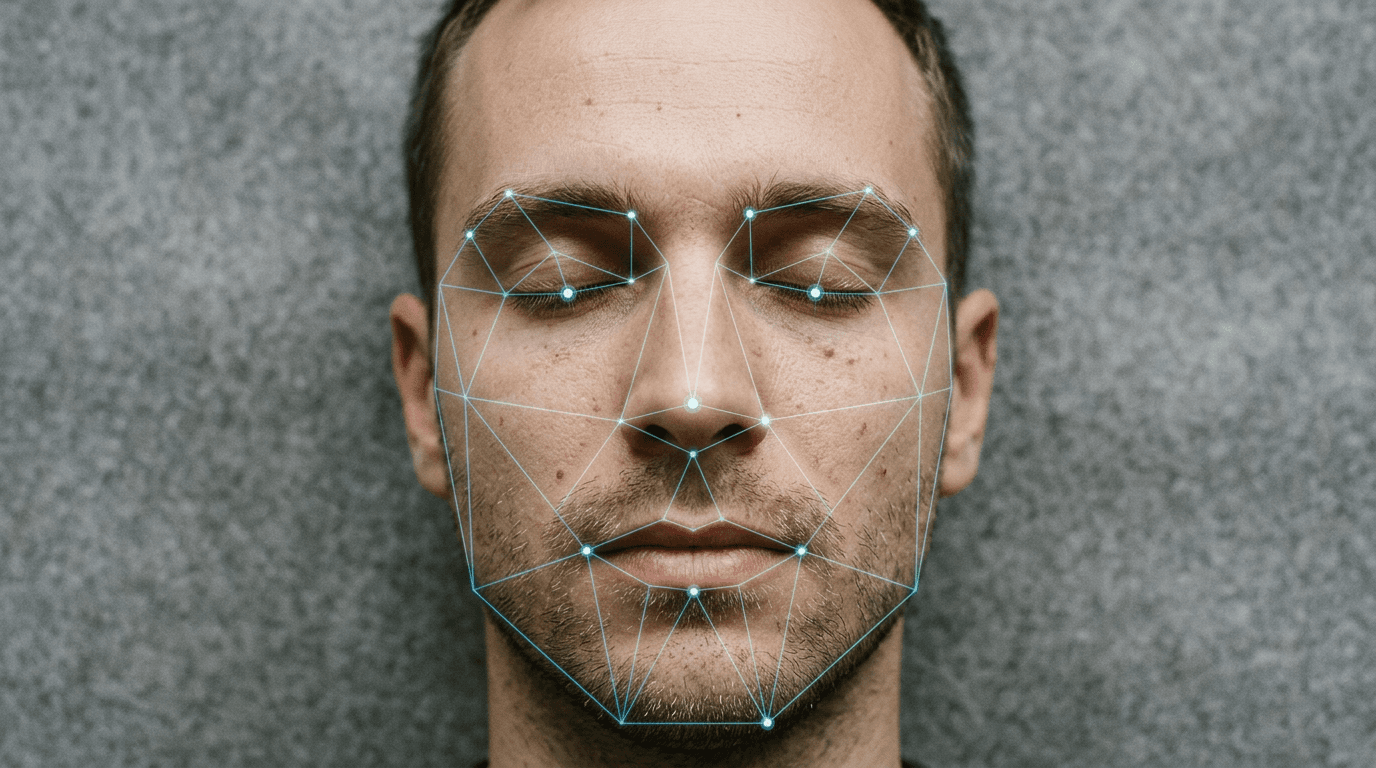
You place a three-week-old infant flat on a white bedsheet, lean over them with a smartphone, and wait for them to look at the lens. The baby arches their back, the overhead room lighting casts a hard shadow from your hand onto their neck, and their head tilts slightly off-axis. That resulting foto passaporto is already invalid before the camera shutter even closes. When securing official travel documents for an infant, the margin for error is effectively zero because border control systems do not evaluate a picture for cuteness or clarity; they process a strict topographical map of facial geometry. The human eye forgives a slight shadow or a tilted chin, but automated biometric scanners interpret those variances as structural deformities. Understanding exactly what these algorithms measure, and how environmental factors disrupt those measurements, is what separates a successful submission from an automatic rejection.
Quick Summary
A biometric identity photograph is a standardized digital or physical image engineered to allow automated software to map specific nodal points on a human face, such as the distance between the pupils and the exact width of the jawline.
- International standards dictate that the face must occupy a dominant portion of the vertical frame, measured from the chin to the crown.
- Backgrounds must be completely uniform, as gradient lighting disrupts algorithmic edge detection.
- Digital compression introduced by messaging apps destroys the pixel data required for biometric verification.
- Infant submissions require distinct positioning techniques to prevent parental hands from entering the frame.
- Printing must utilize dye-sublimation technology; standard home inkjet halftones are often misread as skin anomalies.
Table of Contents
- The ICAO Baseline Maps Geometry, Not Appearances
- Shadows and Background Wrinkles Break Facial Recognition
- Gravity Makes Infant Alignment the Hardest Variable
- Image Compression Destroys Biometric Edge Detection
- Three Invisible Triggers That Guarantee Automatic Rejection
- Printing at Home Introduces Microscopic Dot Failures
- FAQ
- Recommended Reads
The ICAO Baseline Maps Geometry, Not Appearances
Global travel documentation operates on a shared technical framework established by the International Civil Aviation Organization (ICAO). Specifically, ICAO Document 9303 outlines the exact technical specifications required for Machine Readable Travel Documents (MRTDs). When a government agency evaluates a foto passaporto icao submission, they are running the image file through software that plots geometric coordinates across the applicant's face.
The algorithm primarily searches for high-contrast nodal points: the center of the pupils, the tip of the nose, the corners of the mouth, and the distinct curvature of the chin. By calculating the exact distances and angles between these points, the system generates a unique mathematical template. For this template to be accurate, the raw image must present the face completely square to the camera lens. A head pitch (tilting up or down) or yaw (turning left or right) of more than a few degrees actively changes the apparent distance between the eyes and the nose in a two-dimensional image.
This rigid geometric requirement is why dimensions are so strictly enforced. Most jurisdictions require the distance from the bottom of the chin to the crown of the head to occupy a specific percentage of the total image height. The specifications detailed in the United States Baby Passport Photo Guide require the head to measure between 1 and 1.375 inches within a 2-by-2-inch frame. If the head is cropped too tightly, the software cannot locate the boundary between the hair and the background. If the head is too small, the pixel density covering the vital facial features drops below the minimum threshold required for accurate nodal plotting.
Shadows and Background Wrinkles Break Facial Recognition
Lighting a biometric photograph is not about flattering the subject; it is entirely about eliminating false depth cues. Facial recognition algorithms construct a three-dimensional understanding of a face from a two-dimensional file by analyzing light and shadow. When people ask come deve essere la foto per il passaporto, the foundational answer is that it must feature entirely flat, even illumination.
A common failure occurs when a single directional light source, such as a window to one side of the room, illuminates half of an infant's face while leaving the other half in shadow. To an automated scanner, a heavy shadow on the right cheek does not register as poor lighting; it registers as an asymmetrical facial structure. The software assumes the shadowed area recedes further back into the skull, creating a mismatch with the applicant's true geometry.
The background requires identical evenness. Biometric systems use edge-detection algorithms to separate the subject from the space behind them. The background must generally be pure white or a specific shade of light grey, depending on the issuing country. If a parent places an infant on a wrinkled white bedsheet, the folds in the fabric create dark, gradient shadows. The edge-detection software struggles to differentiate where the infant's clothing or hair ends and where the dark crease in the sheet begins.
Practical rule: If a shadow falls across the edge of the infant's jawline or touches their ear, the edge-detection algorithm will fuse the subject with the background and reject the file.
Achieving this level of uniformity usually requires diffused daylight. Direct sunlight creates harsh, high-contrast shadows under the nose and chin, while standard indoor ceiling lights often cast a yellow or orange color cast that violates white-balance requirements. The standards outlined in the United Kingdom Baby Passport Photo Guide emphasize that backgrounds must be entirely free of objects, textures, and secondary people.
Gravity Makes Infant Alignment the Hardest Variable
Securing a compliant image of an adult merely requires them to stand against a wall and look straight ahead. Infants, particularly newborns who lack the cervical spine strength to support their own heads, present a unique mechanical challenge. Gravity actively works against the required positioning.

When a baby is laid flat on their back, their natural resting posture often involves turning the head to one side. If a parent attempts to correct this by holding the infant's head straight, the parent's fingers will inevitably appear in the frame. Any visible hands, arms, or external supporting devices result in an immediate algorithmic rejection. Furthermore, the presence of pacifiers, bulky headbands, or toys obscures the chin and forehead boundaries, breaking the geometric map.
Understanding the specific foto passaporto regole allows parents to manipulate the environment rather than the child. One highly reliable method involves draping a compliant, smooth white cloth over a rigid infant car seat. Placing the baby in the angled seat utilizes gravity to keep their head centered and upright without requiring manual support. The camera can then be positioned parallel to the child's face.
Eye visibility is another critical metric. While some jurisdictions offer slight leniency for newborns regarding a perfectly direct gaze, the eyes must unequivocally be open and fully visible. Red-eye, caused by a camera flash reflecting off the retina, obscures the pupil entirely. Because the pupil is the primary anchor point for measuring facial width, any obscuration halts the verification process. Methods for managing these gaze requirements are deeply detailed in the Australia Baby Passport Photo Guide, which notes the specific tolerances border agencies apply to infants under one year of age.
Image Compression Destroys Biometric Edge Detection
A photograph that looks perfectly clear on a smartphone screen may be structurally ruined by digital compression. When a digital sensor captures an image, it records specific color and brightness data for every single pixel. However, standard consumer software aggressively discards this data to make files smaller and easier to transmit.
If a parent takes a compliant photo and sends it to their partner via a standard messaging app like WhatsApp or iMessage, the app applies heavy chroma subsampling and JPEG compression. This process groups adjacent pixels together and averages their colors. While the human eye cannot easily detect this averaging, algorithmic scanners immediately spot the loss of crisp boundaries. The sharp line between the infant's iris and the whites of their eyes becomes a blurred, pixelated gradient. When the scanner attempts to drop a pinpoint on the exact center of the pupil, the blurred data forces it to guess, leading to geometric inaccuracies and subsequent rejection.
| Verification Dimension | Manual Studio Assessment | Automated Biometric System |
|---|---|---|
| Edge Detection | Evaluates visual sharpness subjectively | Measures pixel contrast gradients mathematically |
| Background | Ignores minor fabric wrinkles | Rejects gradients and shadow structures |
| Color Fidelity | Checks for general natural skin tone | Requires specific sRGB color space mapping |
| Scale | Measures physical print with a ruler | Calculates pixel-to-dimension ratios instantly |
For digital submissions, the file must be transferred using methods that preserve the original EXIF data and exact pixel mapping, such as email attachments sent at "Original Size" or direct cloud storage links. The resolution must be high enough to allow the scanning software to zoom in on micro-features without encountering digital noise. The structural limits of these digital files are heavily regulated, as seen in the Canada Baby Passport Photo Guide, which enforces strict maximum and minimum file sizes to ensure the mathematical integrity of the image remains intact.
Three Invisible Triggers That Guarantee Automatic Rejection
Most parents recognize obvious failures like closed eyes or crying faces, but biometric systems frequently reject images that appear flawless to the naked eye. Reviewing a standard esempio foto passaporto highlights what the final image should look like, but it does not reveal the invisible digital markers that cause algorithms to fail a submission.
First, the use of smartphone "Portrait Mode" or artificial bokeh effects guarantees rejection. These computational photography tools use software to artificially blur the background, simulating a shallow depth of field. In doing so, they often miscalculate the edges of fine hair, blurring the outer boundary of the head into the background. Biometric scanners detect this artificial edge manipulation instantly and flag the image as digitally altered.
Practical rule: Never use software tools to remove red-eye; the application digitally paints over the pupil with artificial black pixels, which the scanning software registers as a fraudulent manipulation of biometric data.
Second, excessive ISO noise ruins the depth map. If a photo is taken in a dimly lit room without a flash, the smartphone camera automatically increases its sensor sensitivity (ISO). This introduces digital grain - tiny, random variations in pixel color and brightness across the image. When the algorithm scans the cheeks and forehead, it reads this grain as extreme skin texture anomalies or physical scarring, which disrupts the generation of the facial template.
Third, glare on the skin creates dead zones. If a camera flash is used too close to the subject, the light bounces off the natural oils on the forehead or the tip of the nose, resulting in a cluster of pure white pixels (blown highlights). Because there is zero data in a pure white pixel, the scanner perceives a physical hole in the face's geometry. The Germany Baby Passport Photo Guide outlines how strict the European Union is regarding the total absence of flash reflection and artificial alterations.
Printing at Home Introduces Microscopic Dot Failures
While many applications have moved online, numerous jurisdictions and visa processes still require physical printed photographs. The translation from a digital file to a physical print introduces an entirely new layer of technical failure, primarily due to the limitations of consumer-grade printing hardware.
Standard home inkjet printers create images by spraying microscopic droplets of Cyan, Magenta, Yellow, and Key (Black) ink onto the paper in a halftone pattern. When a human looks at the print, their brain blends these dots into continuous skin tones. However, when the passport office places that physical print onto a high-resolution flatbed scanner to digitize it back into their system, the scanner's lens resolves the individual ink dots. The resulting scan looks like a grid of colored circles rather than a human face, completely breaking the facial recognition software.
Physical prints must be generated using dye-sublimation technology. Dye-sublimation printers use heat to transfer dye onto the paper in continuous, solid tones without any dot patterns. This ensures that when the passport office scans the print, the resulting digital file retains the smooth gradients necessary for nodal mapping. Furthermore, the paper must generally be a high-quality matte finish. Glossy paper frequently creates extreme glare when subjected to the harsh light of the government's flatbed scanner, resulting in the same blown-highlight failures caused by a camera flash. Specific substrate and DPI requirements for physical submissions are rigorously enforced, as detailed in the Singapore Baby Passport Photo Guide.
FAQ
Do both of the infant's ears need to be visible?
Yes, in almost all jurisdictions. The algorithm uses the outer edges of the face and ears to determine the exact horizontal center of the skull. If one ear is obscured by a head tilt or thick hair, the geometric map will be asymmetrical.
Can a newborn's eyes be closed in the photo?
No. While adults must maintain a direct, intense stare, infants simply must have their eyes open and the pupils visible. Closed eyes eliminate the primary anchor points the algorithm uses to scale the rest of the face.
What is the correct background color for a biometric image?
It depends entirely on the issuing country. The United States requires pure white, while many European nations and the UK mandate a light grey or cream to create better contrast against pale skin and white clothing.
How recent does the photograph need to be?
Most international standards require the photograph to have been taken within the last six months. However, because infant facial structures change rapidly in the first year of life, border agencies highly recommend taking the photo as close to the application date as possible.