Passport Photo Makeup Rules: 7 Grooming Tips for Biometric Compliance
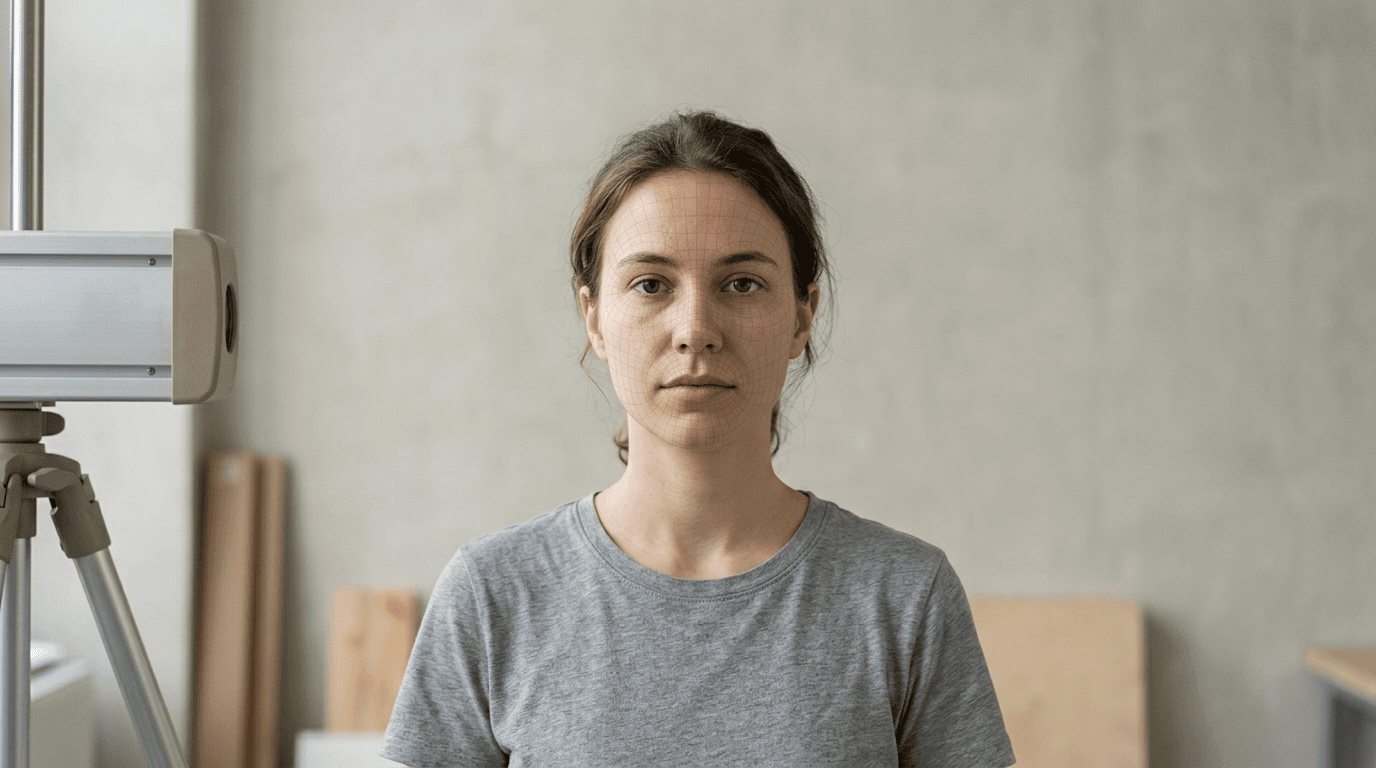
You receive the rejection notice a week before your flight: "Photo non-compliant - facial features obscured." The culprit is usually not a physical obstruction, but a makeup technique that confused the automated biometric scanners. Facial recognition software does not see beauty; it sees geometric distances, pixel contrast, and edge detection. When you apply heavy contour or a high-gloss finish, you are actively altering the topography the algorithm uses to verify your identity against your physical passport at border control.
Many applicants researching foto passaporto trucco realize too late that standard cosmetic techniques actively trigger biometric rejections. Automated compliance engines measure the exact distance between your pupils, the depth of your eye sockets, and the distinct line of your mouth. Altering these landmarks with modern makeup trends is the fastest route to an application denial. Whether you need a travel visa image or a standard fototessera o foto tessera, the fundamental rules of facial recognition remain identical.
Quick Summary
Passport photo makeup must enhance your natural features without altering facial geometry, creating glare, or obscuring biometric landmarks. Biometric scanners require a clear, high-contrast view of your skin texture, eye edges, and lip boundaries to verify your identity.
- Use matte foundations to prevent glare that scanners read as hot spots.
- Avoid contouring, which changes the perceived depth of your facial structure.
- Keep eyeliner tight to the lash line to avoid obscuring the eyelid.
- Do not conceal permanent facial marks like moles, scars, or birthmarks.
Table of Contents
- The Biometric Lens
- 1. Foundation and Skin Finish
- 2. Contouring and Highlighting
- 3. Eye Makeup and Eyeliner
- 4. Lip Color and Finish
- 5. Eyebrow Grooming
- 6. Hair Placement and Flyaways
- 7. Blemishes and Concealer
- FAQ
- Recommended Reads
The Biometric Lens
Before detailing individual grooming items, you must understand how passport photos are judged. Human clerks rarely evaluate these images directly anymore. Instead, compliance software based on ISO/IEC 19794-5 standards scans the photo. This software looks for uniform lighting, distinct facial edges, and natural skin reflectivity. Every grooming choice below is judged by a single criterion: does it interfere with the algorithm's ability to map a grid over your face? If a technique creates a shadow where none exists, or reflects light back into the camera lens, it fails.
1. Foundation and Skin Finish
Foundation serves as the base layer for your skin, intended to even out discoloration and provide a uniform texture. For passport photography, this layer must mimic bare skin under bright, direct lighting. Biometric software evaluates pixel saturation to ensure uniform illumination across the face.
When you use a dewy, luminous, or wet-finish foundation, the studio lights reflect off the oils and silicones in the product. The software reads these bright reflections as "hot spots" - areas where the lighting is deemed uneven or overexposed. This immediately triggers a lighting rejection. Conversely, products with a sheer, matte formulation absorb light, allowing the scanner to read the natural topography of your face without interference. If you are preparing documentation for your entire family, you can review specific Baby Passport Photo Requirements by Country - 100+ Guides to see how strict lighting rules apply globally.
Matte finishes pass, but heavy coverage flattens features
The ideal approach is a sheer to medium-coverage matte foundation set with a translucent powder. This eliminates the glare while retaining the natural variations in your skin tone that algorithms expect to see.
The honest limit here is baking or using High Definition (HD) silica powders. While a light dusting of standard powder removes shine, baking your under-eyes with HD powder causes severe flashback under a camera flash. The silica reflects the light violently, resulting in white patches under your eyes that mask the lower orbital bone entirely. If you have dry skin, skip the heavy powder and use blotting papers immediately before the photo is taken.
2. Contouring and Highlighting
Contouring involves using darker shades to create artificial shadows, while highlighting uses lighter shades to bring features forward. It is a technique explicitly designed to alter the perceived shape of a face - slimming the nose, carving out cheekbones, or shortening the forehead.
Facial recognition systems map the distance between the bridge of your nose, your cheekbones, and your jawline. When you paint a shadow down the side of your nose, the software registers a different physical width than your actual bone structure possesses. When you cross a border control gate three years later without that exact contour, the live camera map will not match the biometric template stored on your passport chip.
Sculpted shadows break facial recognition geometry
Avoid any product intended to cast a shadow. A light bronzer applied with a fluffy brush to restore natural color is acceptable, but drawn, blended lines are not.
Practical rule: If a makeup technique is designed to change the shape of a feature rather than its color, do not wear it in a biometric photo.
Aggressive highlighter can easily ruin your photo. While contour creates false depths, highlighter creates false peaks. Strobing the tip of your nose or the high points of your cheekbones will cause isolated glare. The algorithm will reject the photo for uneven lighting, assuming the flash was improperly calibrated. Stick to your natural bone structure.
3. Eye Makeup and Eyeliner
Eye makeup draws attention to the eyes by framing them with darker pigments. In daily life, heavy eyeliner and false lashes are standard. In biometric photography, the eyes are the most critical anchor points. The software must locate the exact center of the pupils, the clear boundary of the iris, and the distinct upper and lower edges of the eyelid to measure eye openness.
Heavy, dark eyeshadow that extends into the crease can mask the physical fold of the eyelid. When the software cannot detect this fold, it flags the image for obscured features. Similarly, eyeliner drawn past the natural corner of the eye (a wing or cat-eye) extends the perceived width of the eye, corrupting the pupillary distance ratio.
Winged eyeliner obscures crucial biometric landmarks
Keep eyeliner restricted strictly to the lash line. Do not extend it beyond the outer corner, and avoid thick, black lines on the lower waterline, which can make the eyes appear artificially narrow.
Applying false eyelashes and heavy mascara will quickly interfere with biometric detection. False lashes physically protrude and cast a downward shadow over the iris, especially under overhead lighting. This shadow prevents the scanner from confirming your eye color and shape. If you must wear mascara, use a single coat of a lengthening formula rather than a volumizing one to prevent clumping. For precise guidelines on how strictly different governments evaluate facial landmarks, the United States Baby Passport Photo Guide outlines the stringent requirements enforced by the State Department.
4. Lip Color and Finish
Lipstick and lip gloss add color and volume to the mouth. The mouth is the secondary anchor point for facial recognition. The software must identify the precise line where the upper and lower lips meet to verify that the subject has a neutral expression with a closed mouth.
If you wear a nude lipstick that perfectly matches your skin tone, you erase the physical boundary of the lips, causing the algorithm to struggle with expression verification. Conversely, metallic, frosted, or high-gloss lip products catch the studio flash, creating intense white reflections on the lower lip. The software interprets these reflections as moisture or lighting errors, leading to an automatic rejection.
High-gloss finishes trigger moisture glare rejections
The optimal choice is a matte or satin lipstick in a shade that closely mirrors your natural lip color. This provides the necessary contrast against your skin without introducing reflective glare.
Overlining your lips poses a serious risk during automated checks. Drawing outside your natural lip border changes the dimensions of your mouth. When the live scanner at the airport compares your face to your passport, the vertical distance from your nose to your upper lip will not match the baseline geometry. Apply color only to your natural lip tissue.
5. Eyebrow Grooming
Eyebrows frame the upper third of the face and serve as high-contrast indicators for the orbital bone. Grooming them involves brushing, trimming, and occasionally filling in sparse areas to create a uniform appearance.

Because eyebrows are highly distinct features, they are heavily weighted in facial mapping algorithms. Drastically altering their shape, thickness, or arch height changes your biometric signature. If you shave off the tail of your brow to draw it higher, the software registers a completely different brow ridge.
Redrawn arches create a false biometric anchor
Groom your eyebrows by brushing them into their natural shape and filling in only the areas where hair is genuinely missing. Use a pencil or powder that matches your hair color exactly.
Heavy pomades and laminated looks easily trigger system errors. Thick, dark pomades create a solid block of color that lacks the texture of natural hair, which can look artificial to high-resolution scanners. Brow lamination or heavy gels that glue the hairs straight up alter the natural boundary of the brow. Keep them neat, but do not redesign them. You can learn more about how precise these facial anchors must be by consulting the Help Center for technical specifications.
6. Hair Placement and Flyaways
While hair is not a fixed biometric feature - people go bald, change colors, and get haircuts - the way it falls across your face directly impacts the visibility of the features that are fixed. The software requires a clean, unobstructed view of the oval of your face, from the bottom of the chin to the top of the forehead, and across both cheekbones.
Hair that falls across the eyebrows, drapes over the cheeks, or obscures the jawline creates physical obstructions. Even if the hair is thin, the shadows it casts onto the skin disrupt the algorithm's edge detection.
Face-framing layers simulate structural shadows
Pull all hair back behind your shoulders and tuck it behind your ears. If you have bangs, they must be pinned back or swept entirely to the side so that both eyebrows are fully visible.
Practical rule: If a strand of hair casts a shadow on your skin, it must be pinned back or sprayed down.
Severe, wet-look styling will compromise the quality of your passport photo. Slicking your hair back tightly with high-shine pomades or gels can expose the scalp to the camera flash, creating a massive reflective hot spot on your forehead or hairline. Use a matte hairspray or a light paste to control flyaways without adding a reflective sheen. Certain jurisdictions are notoriously strict about hair shadows, as detailed in the United Kingdom Baby Passport Photo Guide.
7. Blemishes and Concealer
Concealer is used for targeted coverage of dark circles, blemishes, scars, and hyperpigmentation. It is generally thicker and more opaque than foundation, designed to erase marks from the skin.
There is a strict legal and technical distinction between a temporary blemish and a permanent identifying mark. A stress breakout, a scratch, or lack of sleep dark circles are temporary conditions. Concealing them is perfectly acceptable. However, moles, birthmarks, permanent scars, and distinct freckle patterns are classified as unique identifying features. If you use a heavy-duty concealer to completely erase a permanent facial scar, you are presenting a falsified biometric record.
Erasing permanent marks constitutes biometric forgery
Use a lightweight, color-correcting concealer to neutralize under-eye darkness and cover active, temporary acne. Tap the product in with a sponge to ensure it blends seamlessly with your matte foundation.
Camouflage makeup designed for tattoo or scar coverage can cause serious delays at border control. These products are too opaque and will flatten the texture of your skin entirely. If border control officers note a prominent mole on your cheek that is entirely absent from your passport photo, you will be pulled aside for secondary questioning. Preserve your permanent features exactly as they appear in reality. Families seeking more context on these stringent international standards can read About Us to understand how automated compliance systems process these variables globally.
FAQ
Can I wear lip gloss in my passport photo?
No. Lip gloss creates a reflective glare under the camera flash. Biometric software interprets this glare as uneven lighting or moisture, which frequently results in the photo being rejected.
Is it acceptable to use concealer on a permanent scar?
No. Permanent scars, moles, and birthmarks are considered identifying biometric features. Masking them with heavy concealer alters your physical record and can cause issues at border control.
Can I wear false eyelashes if they look natural?
It is highly discouraged. Even natural-looking false eyelashes cast shadows over the iris and obscure the eyelid margin, interfering with the software's ability to measure eye openness.
Should my foundation be matte or dewy?
Always use a matte foundation. Dewy or luminous finishes reflect light, creating hot spots that fail automated lighting checks.
Do I need to tuck my hair behind my ears?
Yes. Your hair must not obscure your jawline, cheekbones, or eyebrows. Tucking it behind your ears ensures the full oval of your face is visible to the biometric scanner.