Mastering the Requirements for Italian Passport Photos in 2026
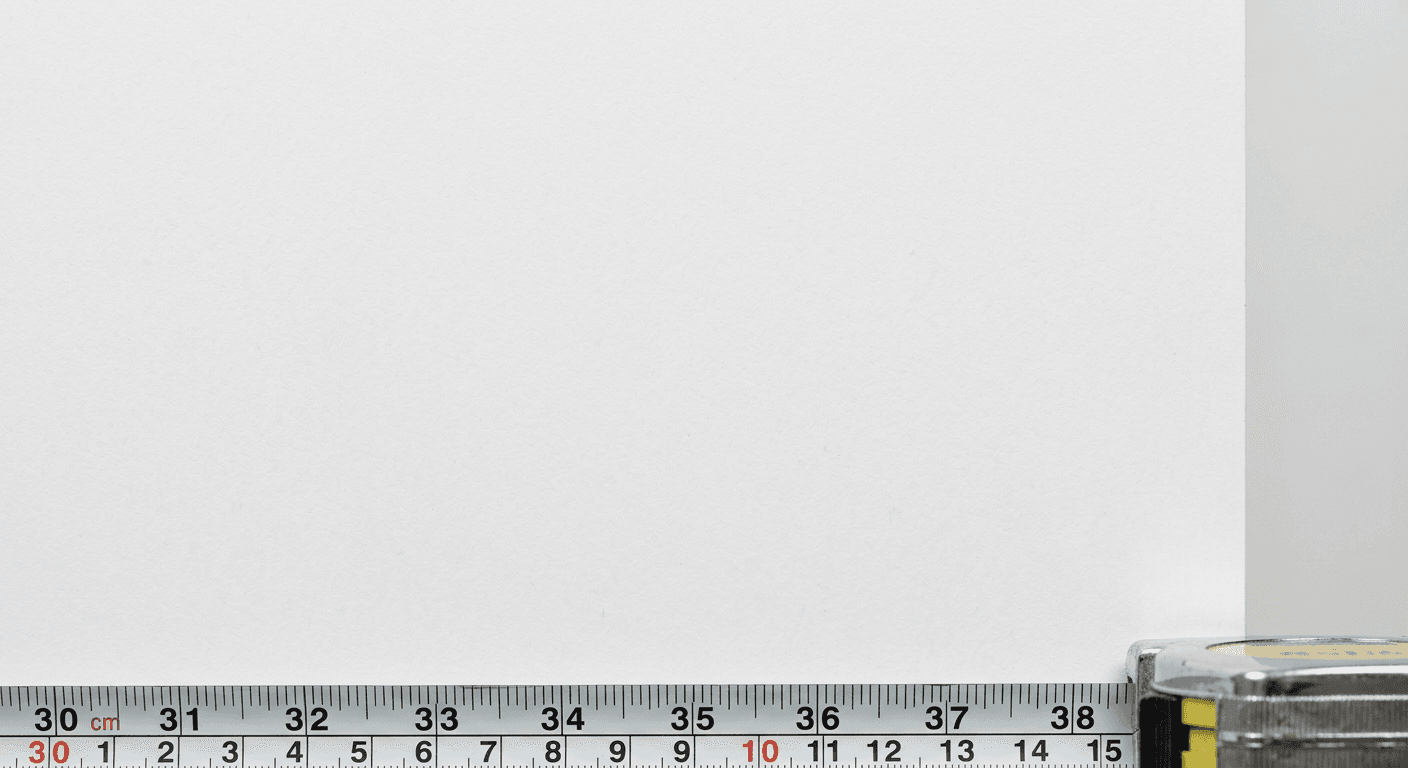
Handing an application to a consulate clerk only to watch them slide the paperwork back across the desk because the geometry of your infant's face fails algorithmic verification is a distinct administrative failure. Producing acceptable italian passport photos requires mapping a squirming newborn to rigid biometric baselines designed for adults. The margin for error is non-existent, and a shadow under the chin or a slight tilt of the head will halt a travel document application immediately.
Automated biometric software now intercepts these images before human discretion ever applies. Understanding exactly how the optical character recognition algorithms measure eye distance, background segmentation, and facial framing is the only way to bypass the continuous cycle of rejections. This guide isolates the mechanical requirements of Italian travel and residence documentation, breaking down the exact thresholds your images must cross to secure government approval.
Quick Summary
An Italian passport photo is a 35x45mm biometric image that demands a 32-36mm vertical head height, strict neutral expressions, and zero background shadowing to pass automated verification.
- Geometric precision: The face must occupy a dominant proportion of the total vertical frame, measured by the distance from the bottom of the chin to the crown.
- Lighting standards: Continuous, flat lighting is required to eliminate background shadows and facial contours.
- Infant posture: Eyes must remain open and visible, with no hands, blankets, or supporting devices in the frame.
- Digital resolution: Submissions for the Electronic Identity Card (CIE) require a specific minimum digital resolution to guarantee clarity.
Table of Contents
- Why Italian consulates reject infant submissions first
- How ICAO biometric baselines dictate your framing
- Where home lighting ruins digital verification
- What the background color rules actually mean
- When to choose digital files over physical prints
- How posture requirements apply to newborns
- FAQ
- Recommended Reads
Why Italian consulates reject infant submissions first
Italian authorities operate under the strict guidelines of the International Civil Aviation Organization (ICAO). When you submit an italy passport photo to the Questura (police headquarters) or a local consulate, the image is immediately fed into compliance software. This software maps facial landmarks - specifically the distance between the pupils, the vertical line from the chin to the crown, and the horizontal alignment of the mouth.
Infant applications fail this initial scan at a much higher frequency than adult applications because infants lack neck control. When an infant's head tilts even a few degrees off axis, the software records an asymmetrical facial structure. The algorithm does not know it is looking at a newborn; it only knows that the left pupil and right pupil are not perfectly horizontal.
Furthermore, the software analyzes the state of the mouth. A pacifier, a visible tongue, or lips parted in a cry break the continuous edge of the mouth that the biometric system requires to map the lower third of the face. Human clerks cannot override these algorithmic rejections. If the software flags the facial geometry as unreadable, the application is physically halted until a compliant image is provided. Understanding that you are satisfying an optical scanner, rather than a lenient human, completely changes how you must approach capturing the image.
How ICAO biometric baselines dictate your framing
The mathematical dimensions of the image dictate everything about how you position the camera. Unlike the square 2x2 inch format detailed in the United States Baby Passport Photo Guide, European documentation utilizes a strict vertical rectangle. The exact italian passport photo size is 35mm wide by 45mm high.
However, cutting a piece of paper to those dimensions is the easy part. The actual difficulty lies in the internal framing. Within that 35x45mm boundary, the distance from the very bottom of the chin to the exact top of the skull (the crown) must measure between 32mm and 36mm. This leaves roughly 9 to 13 millimeters of negative space, which must be distributed perfectly to leave space above the head and space below the chin. If you pull the camera too far back, the head shrinks below 32mm and the biometric scan fails. If you crop too closely, the head exceeds 36mm, triggering a rejection for being oversized.
Practical rule: Measure the head height from the actual skull boundary, ignoring thick hair, headbands, or bows, to ensure the face occupies the required 70% to 80% of the vertical frame.
This specific proportioning is a shared European standard. You will find near-identical geometric demands in the Germany Baby Passport Photo Guide, as the underlying ICAO framework is uniform across the Schengen area. The camera must remain perfectly level with the subject's eyes. Tilting a smartphone down at a baby lying on the floor introduces lens distortion, which artificially enlarges the forehead and narrows the chin, warping the biometric map beyond acceptable limits.
Where home lighting ruins digital verification
Smartphones automatically compensate for dim rooms by raising their ISO sensitivity, which introduces digital noise, or "grain," into the photograph. Biometric software reads digital noise as physical texture on the face, causing sharpness failures during the scan. To prevent this, the subject must be flooded with even, bright light.
Shadows are the primary cause of background segmentation failures. When lighting comes from a single window (a directional light source), it illuminates one side of the face while casting a hard shadow on the opposite cheek and neck. More critically, it throws a drop shadow onto the background behind the subject. When the background is darker on one side than the other, the software cannot isolate the outline of the head. We see similar environmental lighting challenges detailed in the New Zealand Baby Passport Photo Guide, where uneven exposure routinely causes administrative delays.
To satisfy the scanner, the lighting must be flat. This means the light source should directly face the subject, effectively filling in all contours and preventing shadows from falling onto the background. Overhead room lighting is particularly damaging, as it casts deep shadows directly under the eyes and the chin, altering the perceived shape of the jawline and eye sockets.
What the background color rules actually mean
Italian passport photo specifications explicitly mandate a uniform, light-colored background - typically white or off-white - with zero patterns, textures, or secondary objects. In digital processing terms, this means the background pixels must present a continuous, unvarying hex code.
A common mistake is placing an infant on a white textured blanket or a white leather sofa. While the color technically qualifies as white to the human eye, the camera lens picks up the weave of the blanket or the grain of the leather. The biometric software interprets these textures as foreign objects in the frame.
If you ask a professional in Rome or Milan for a foto passaporto italiano, they will place the subject in front of a seamless, highly illuminated backdrop. Achieving this without a studio requires using a heavy, matte-finish poster board. Standard printer paper is too thin and will show the texture of the floor beneath it, while bed sheets will inevitably show creases and fabric folds. The background must be completely featureless, providing a sharp contrast boundary against the subject's hair and clothing. If the subject is wearing a white shirt that blends into the white background, the software will fail to identify the shoulders, leading to an immediate rejection. This contrast boundary is a universal requirement, mirroring the strict backdrop rules established in the United Kingdom Baby Passport Photo Guide.
When to choose digital files over physical prints
Italy processes both the traditional electronic passport (Passaporto Elettronico) and the Electronic Identity Card (CIE). The physical requirements differ significantly depending on which document you are applying for, and how the local municipality (Comune) or consulate ingests the data.
For the CIE, many municipalities now require a digital file uploaded directly via a USB drive or an online portal. A digital file must be a JPEG with a resolution of at least 400 dpi and a file size typically capped at 500 KB. Submitting a heavily compressed file exported from a messaging app will fail because compression artifacts destroy the biometric sharpness. For traditional passports, consulates still demand physical photographs printed on high-quality photographic paper.
| Specification | Digital File (CIE / Portal) | Physical Print (Passport) |
|---|---|---|
| Dimensions | Equivalent to 35x45mm at 400 dpi | Exactly 35x45mm |
| Format/Paper | JPEG format | High-quality matte or gloss photo paper |
| File Size | Max 500 KB | N/A |
| Damage Tolerance | Zero compression artifacts allowed | No staple marks, ink stains, or creases |
| Quantity | 1 file | 2 identical prints |
If you must print the files yourself, they must be generated on dedicated dye-sublimation photo printers or high-end inkjet photo printers. Standard office paper is instantly rejected. The paper weight and chemical finish are tactile indicators of compliance that consulate clerks check before ever scanning the image. For applicants navigating similar dual-format systems abroad, the strategies in the Australia Baby Passport Photo Guide regarding photo kiosk printing map perfectly onto Italian print requirements.
How posture requirements apply to newborns
The rule requiring the subject to face the camera squarely with a neutral expression does not offer exemptions for infants. Parents cannot hold the child in the frame - any visible hands, arms, or adult clothing will void the image.
The standard method to achieve the correct posture without physical intervention is laying the infant flat on their back. However, ensuring the exact foto passaporto italiano dimensioni (dimensions) requires the camera lens to remain perfectly parallel to the child's face. If the baby is laid on the floor, the parent must stand directly overhead, taking care not to cast their own body shadow onto the infant's face.
Alternatively, placing the infant in a car seat draped with a seamless white poster board allows for a more natural camera angle. This approach is highly effective for infants who suffer from reflux or who refuse to lie flat on their backs. The crucial detail is ensuring the rigid poster board completely obscures the car seat's fabric, straps, and buckles.
Practical rule: Place the camera lens exactly parallel to the infant's face at a distance of 1.2 to 1.5 meters to prevent wide-angle lens distortion from artificially enlarging the nose and narrowing the ears.
In all cases, the infant's eyes must be open. While some consulates exercise marginal leniency for newborns under a few weeks old regarding closed eyes, biometric scanners fundamentally rely on the distance between the pupils to scale the rest of the face. Submitting an image with closed eyes is gambling on the subjective mood of the clerk processing the file. Similar rigid posture enforcement is applied across North America, as noted in the Canada Baby Passport Photo Guide, proving that infant compliance is a matter of strict staging, not timing.
FAQ
Can an infant have their mouth open in an Italian passport photo? No. The mouth must be entirely closed to form a neutral expression. Biometric software requires a closed mouth to accurately map the lower jawline and the distance from the bottom lip to the chin. Pacifiers must be removed entirely.
Do Italian consulates accept photos printed on standard home printer paper? Absolutely not. Physical submissions must be printed on dedicated, high-quality photographic paper (either matte or glossy). Standard printer paper lacks the necessary chemical coating, resulting in ink bleeding that destroys the image's sharpness.
How recent must the photograph be for an Italian application? Photographs must be taken no more than six months prior to the application date. For infants whose facial features change rapidly, it is highly recommended to take the photo within days of the consulate appointment to accurately reflect their current appearance.
What should a baby wear for an Italian passport photo? Clothing should contrast sharply with the required white or off-white background. Dark, solid colors are best. Avoid white shirts, large hoods, or thick collars that rise above the chin, as these disrupt the software's ability to map the neck and shoulders.