International Passport Photo Standards: 7 Global Requirements
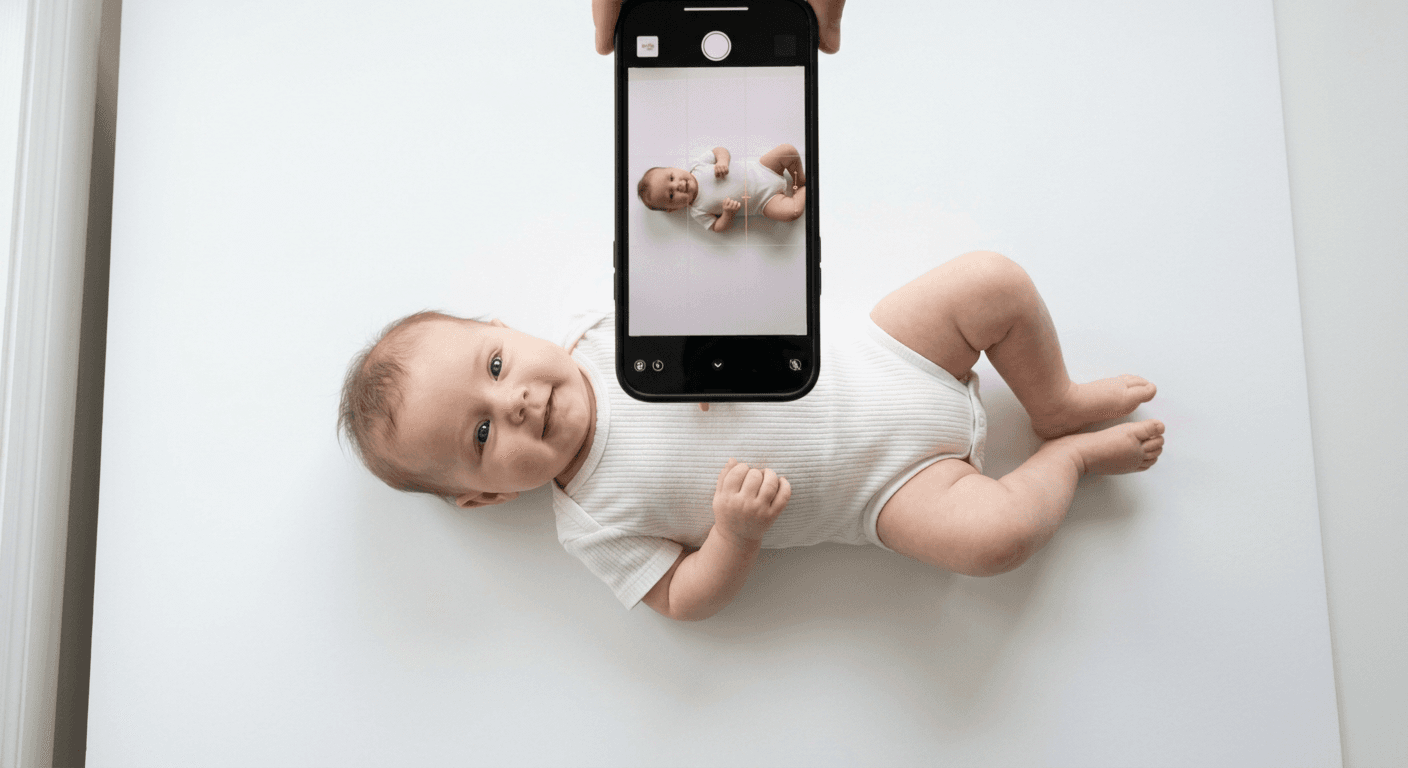
You place your two-week-old on a freshly ironed white bedsheet, hold your smartphone exactly parallel to their face, and take the shot. To your eye, it looks perfect. To a government biometric scanner, the subtle shadow under their left ear and the slight crinkle in the fabric are immediate grounds for rejection. Producing an acceptable document image for an infant requires entirely different preparation than posing an adult. Adult biometrics rely on instruction and posture; infant biometrics rely completely on parental engineering and environmental control.
Why a passport photo fails international checks
We evaluate photo standards across different jurisdictions based on three core criteria: dimensional rigidity, background tolerance, and specific exemptions granted for infants. Every country applies a different algorithmic threshold to these three elements. What passes easily in one digital portal will trigger an instant rejection in another. Understanding the mechanism behind the biometric crop, the color specifications of the backdrop, and the exact physical limits of the print format is the only way to bypass the automated denial systems used by modern immigration authorities.
Quick Summary
An international travel document requires strict adherence to regional biometric photo dimensions, background colors, and facial proportions. While adult standards are rigid, infant applications carry specific exemptions that vary by jurisdiction, dictating whether a child must have their eyes open or can use a non-neutral expression.
- US standards demand 2x2 inch prints with pure white backgrounds.
- UK rules require light grey or cream backdrops, rejecting pure white.
- Canadian applications mandate 50x70mm physical prints with guarantor signatures.
- Schengen and Australian systems strictly enforce ICAO biometric proportions.
- Infants under one year old receive critical eye and expression exemptions in most jurisdictions.
Table of Contents
- Why a passport photo fails international checks
- Quick Summary
- Table of Contents
- Comparison Table
- 1. The United States Standard
- 2. The United Kingdom Rules
- 3. The Schengen and Italian Specifications
- 4. The Canadian Requirements
- 5. The Australian Regulations
- 6. The Singapore and E-Visa Standards
- 7. Global Digital Formatting
- Matching the standard to your application route
- FAQ
- Recommended Reads
Comparison Table
| Jurisdiction | Dimensions | Background Color | Head Size Proportion | Infant Exemption |
|---|---|---|---|---|
| United States | 2 x 2 inches | Pure White or Off-White | 1 - 1 3/8 inches | Eyes closed (under 1) |
| United Kingdom | 35 x 45 mm | Light Grey or Cream | 29 - 34 mm | Non-neutral expression |
| Schengen / Italy | 35 x 45 mm | Light / White | 32 - 36 mm | Limited exceptions |
| Canada | 50 x 70 mm | White or Light Colored | 31 - 36 mm | Neutral expression waived |
| Australia | 35 x 45 mm | White or Light Grey | 32 - 36 mm | Mouth open (under 3) |
| Singapore | 35 x 45 mm | White | 25 - 35 mm | None specified |
1. The United States Standard
Forgiving on infant expressions, rigid on dimensions
The US State Department uses a distinct 2x2 inch (51x51mm) square format that applies equally to adults and newborns. It is designed for applicants applying for federal travel documents or US visas. For dual citizens applying from Europe, local studios often misunderstand the foto passaporto americano specifications, defaulting to their regional 35x45mm cutters instead of the required 2x2 inch format.
A rigid biometric oval drives the US approval system. When the image is scanned, software places an oval over the face to measure head height. This measurement must sit precisely between 1 and 1 3/8 inches from the bottom of the chin to the top of the head. The software maps the head's perimeter against a pure white or off-white background. Any dark shadows cast on the backdrop will intersect with the facial boundary. This causes the extraction algorithm to fail. The US system explicitly permits infants under one year old to have their eyes closed. This acknowledges the difficulty of waking a newborn for a specific pose.
The limit of this standard hits applicants when children transition to toddlerhood. The moment a child passes the one-year mark, the closed-eye exemption vanishes. Parents attempting to use the newborn leniency for a 14-month-old will receive an immediate rejection, as the software expects a clear, forward-facing gaze with fully visible irises. You can review the exact measurements in the United States Baby Passport Photo Guide to ensure the head proportion sits correctly within the required square.
2. The United Kingdom Rules
Zero tolerance for white backgrounds and support hands
The UK Home Office dictates a 35x45mm rectangular format for all citizens. Applying the exact passport photo requirements uk authorities mandate means completely abandoning the standard white background used by North American systems. This format applies to domestic applications and renewals handled through the government's digital portal.
The underlying mechanism for UK biometric mapping requires high contrast between the edge of the subject's face and the environment. Under the current passport photo guidelines uk systems enforce, any pure white backdrop triggers an automatic rejection. This rejection happens because it frequently causes glare that obscures the outline of pale skin or light hair. Instead, the background must be a solid light grey or cream. The digital scanning system scans for edge continuity. If a parent's hand or arm enters the frame to support an infant's head, the software identifies it as an overlapping body part. It then flags the file.
Practical rule: Never support a baby's head by placing your hand behind their neck during the shot, as your fingers will invariably cast a shadow or become visible around their shoulders, triggering a biometric failure.
This standard fails parents who attempt to photograph their children in car seats. Even if the fabric is covered by a grey blanket, the deep structural shadows created by the car seat's side-impact wings will completely darken the edges of the image. The United Kingdom Baby Passport Photo Guide details how to achieve the necessary flat lighting by laying the infant down rather than propping them up.
3. The Schengen and Italian Specifications
Strict adherence to ICAO biometric framing
Countries within the Schengen Area utilize the 35x45mm format governed by the International Civil Aviation Organization (ICAO). An acceptable italy passport photo relies heavily on strict adherence to this ICAO biometric framing, which demands perfect horizontal eye alignment. This standard is built for citizens traveling across European borders where automated e-gates handle the majority of passport processing.
The mechanism of the ICAO standard focuses on facial area percentage. The face must occupy a dominant portion of the total photograph vertically, requiring a strict measurement from the chin to the crown. Because European e-gates use iris and facial geometry scanning, the software mathematically measures the distance between the pupils and the distance from the nose bridge to the chin. If the camera is tilted even slightly upward or downward during capture, the resulting perspective distortion alters these distances, causing the e-gate to reject the physical document later on.
Where this standard breaks down is its rigid expectation of a neutral expression for older babies. While a newborn might be granted slight leeway for a parted mouth, European consulates frequently reject applications for toddlers if they are smiling, crying, or frowning. The biometric software interprets a wide smile as a distortion of the cheekbones and jawline. Checking the broader Baby Passport Photo Requirements by Country reveals that the Schengen zone is historically the least forgiving regarding facial expressions.
4. The Canadian Requirements
Large physical dimensions with no breathing room
Canada enforces one of the largest physical print requirements in the world, mandating a 50x70mm (2x2 3/4 inches) photograph. This is exclusively for Canadian citizens processing applications through Service Canada or overseas consulates, and it fundamentally alters how the image is captured and printed.
The system works through physical verification rather than immediate digital upload. The back of one physical print must bear the name and address of the photography studio and the date the photo was taken. It also requires the signature of a qualified guarantor. This person must have known the applicant (or the parent) for at least two years. The biometric facial measurements are equally vast. Head height must sit precisely between 31mm and 36mm. Because the print is physically larger, any pixelation, motion blur, or slight out-of-focus areas become glaringly obvious to the reviewing officer. The processing agent manually overlays a transparent template onto the print to confirm the chin and crown fall within the designated lines.
This requirement makes entirely digital, guarantor-free submissions impossible for first-time infant passports. Parents attempting to bypass the physical print and guarantor signature for a newborn will have the application mailed back. The Canada Baby Passport Photo Guide explains how to format the back of the print correctly once the image passes the initial dimensional checks.
5. The Australian Regulations
Heavy scrutiny on shadows and background textures
The Australian Passport Office requires a 35x45mm image, heavily emphasizing lighting uniformity and the absence of background texture. This standard applies to all Australian citizens and dictates a head size between 32mm and 36mm. It is particularly notorious for rejecting images based on environmental artifacts.
The mechanism for failure here is the background isolation algorithm used by the Australian processing system. When the image is uploaded, the software attempts to isolate the subject from the background to run a secondary contrast check. If the baby is lying on a bedsheet with visible weaving, wrinkles, or folds, the algorithm misinterprets the fabric texture as part of the subject's outline. Furthermore, any shadow cast behind the ears or under the chin registers as an uneven light source, violating the requirement for flat, diffused illumination.
Practical rule: Replace fabric bedsheets with a piece of matte white poster board when photographing infants from above - cardboard provides zero texture for the camera to pick up and eliminates the folds that cause background rejections.
This standard punishes applicants who rely on a single overhead room light. A ceiling fixture casts strong downward shadows over the eye sockets and beneath the nose. If you review the Australia Baby Passport Photo Guide, you will see that achieving the required flat lighting requires positioning the infant facing a window for natural, indirect daylight.
6. The Singapore and E-Visa Standards
Mathematical glare rejection for digital uploads
Singapore's Immigration and Checkpoints Authority (ICA) uses a highly automated digital portal that expects a 35x45mm image with a strict 400x514 pixel resolution for online uploads. This system is designed for rapid processing of both citizen passports and international e-visas.
The upload mechanism utilizes mathematical glare detection. When a digital file is submitted, the algorithm maps the brightness values (luminance) across the pixels making up the forehead, cheeks, and background. If the differential in brightness between a hotspot (glare from a flash) and the surrounding skin exceeds the portal's threshold, the system immediately flags the image as artificially altered or obscured. For physical prints submitted in person, the ICA explicitly demands a matte finish. Glossy photo paper reflects the overhead scanner light at the consulate, mimicking facial glare and triggering the same algorithmic rejection.
The limit of this standard is its intolerance for flash photography on infants. Parents using a smartphone flash to combat a dimly lit room will inevitably create a specular highlight on the baby's forehead or cheeks. The Singapore Baby Passport Photo Guide outlines the exact pixel specifications and file size limits (under 60KB for specific visa types) required to clear the portal's initial upload gate.
7. Global Digital Formatting
Compression artifacts destroy biometric viability
Regardless of the jurisdiction, almost every government now relies on a digital file at some stage of the verification process, whether uploaded directly by the applicant or scanned from a print. The standard requires an uncompressed or minimally compressed JPEG file, typically captured at a minimum of 300 Dots Per Inch (DPI) to ensure edge fidelity.
The technical mechanism of a digital biometric check relies on pixel mapping at the boundaries of the face. Lossy compression formats, like heavily compressed JPEGs, save file size by averaging the colors of adjacent pixels. When an image is compressed, the boundary where a baby's wispy hair meets the background becomes a blurred, blocky artifact. The extraction algorithm can no longer determine exactly where the head ends and the background begins, resulting in an automatic failure for incorrect head sizing.
This reality ruins photos that are shared through standard third-party messaging apps before upload. If a parent takes a perfectly compliant photo but sends it to their partner via WhatsApp or iMessage, the app applies aggressive compression to the file. The recipient downloads an image that looks fine to the human eye but lacks the edge definition required by a government scanner. The file must be transferred via email at original size or through a lossless cloud link to retain its biometric viability.
Matching the standard to your application route
Selecting the correct approach depends entirely on the specific application portal you are facing. If your bottleneck is an automated digital upload system like the UK or Singapore portals, your primary focus must be eliminating shadows and ensuring the correct background color, as the software will gatekeep the application before a human ever sees it.
Conversely, if you are applying for a Canadian document, digital perfection is secondary to securing a high-quality physical print and a willing guarantor. Do not attempt to force a US 2x2 inch square into a European application, and do not expect a European consulate to accept a photo with a smiling infant just because the US allows closed eyes for newborns. You must apply the exact dimensional and environmental rules of the issuing authority, entirely ignoring the standards of the country you happen to reside in.
FAQ
Can an infant have their eyes closed in a biometric photo? It depends on the country and the child's exact age. The US permits infants under one year old to have closed or partially open eyes. The UK and Australia offer similar leniency for infants under one. However, once the child passes their first birthday, all jurisdictions require fully open eyes.
Why was my photo rejected for background texture? Biometric algorithms isolate the face by identifying a continuous, solid background. Wrinkles in a bedsheet, the weave of a blanket, or the stitching on a car seat disrupt this edge-detection software, causing it to misread the outline of the head.
Does a photo have to be printed on glossy paper? Many jurisdictions explicitly forbid glossy paper. Singapore and several European countries require a matte finish because glossy paper creates a glare when scanned by consulate hardware, obscuring the biometric data. Always check the specific paper finish requirement for your destination.
How recent must the image be for a newborn? Most governments mandate that the photo be taken within the last six months. For rapidly changing newborns, immigration authorities generally prefer the image to be as current as possible, often within the last month, to accurately reflect the infant's current appearance.