foto passaporto regole: ICAO Biometric Guidelines for Infant Travel Photos
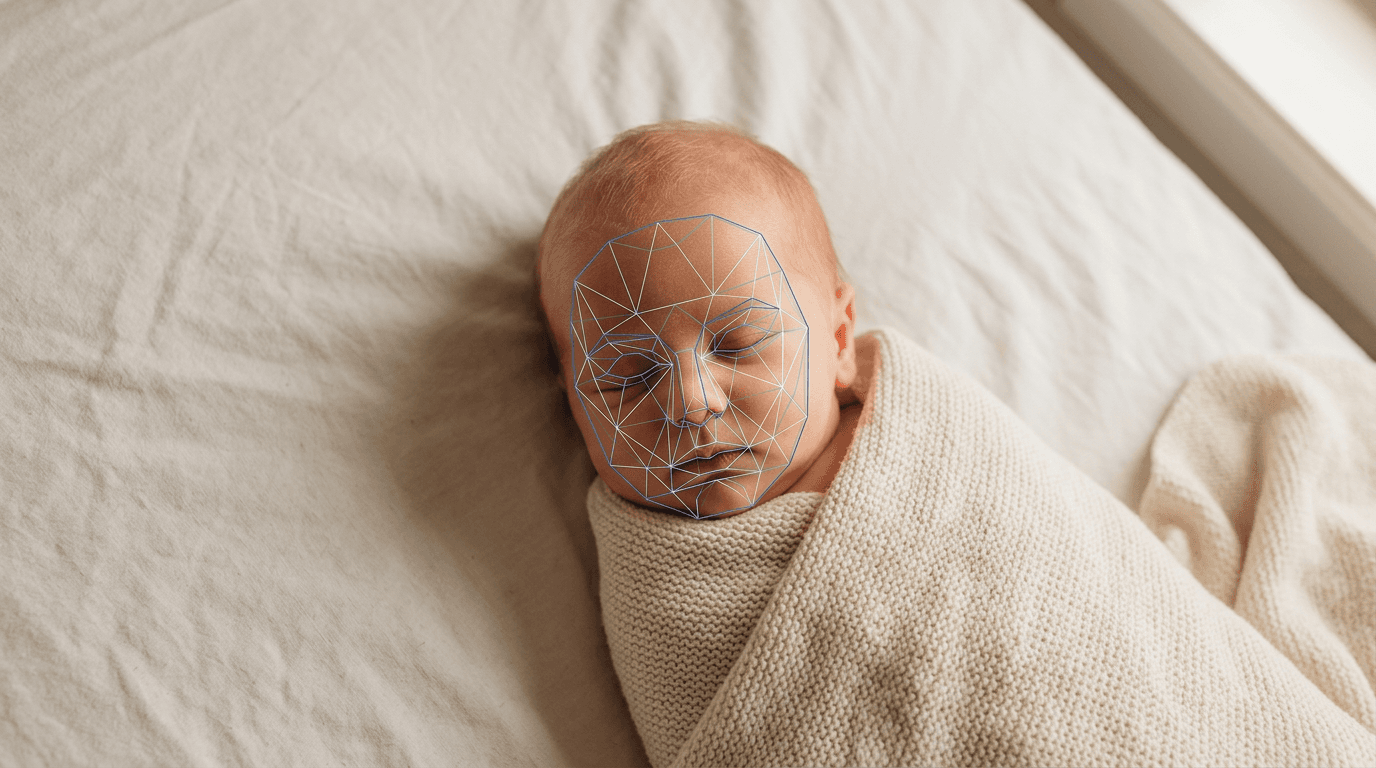
You receive a rejection notice from the passport agency because the infant's shoulder was slightly elevated, throwing off the geometric mapping of their jawline. The primary foto passaporto regole do not care that your subject is a two-week-old newborn. Government biometric software applies the exact same rigid digital matrix to a sleeping infant that it applies to an adult subject standing in a professional studio. Passing these automated checks requires you to stop treating this as a traditional photograph and start treating it as the generation of a clean data matrix for a machine to read.
Quick Summary
Biometric passport photo compliance relies on International Civil Aviation Organization (ICAO) specifications, requiring strict adherence to facial proportions, background uniformity, and balanced lighting. For infants, these rules demand specific positioning techniques to ensure automated border systems can successfully map facial features without encountering shadows, obscured geometry, or digital compression artifacts.
- Head size must occupy the dominant portion of the total vertical image height, requiring precise margins above the crown and below the chin.
- Backgrounds must register as pure white or light grey with zero visible texture.
- The inter-pupillary baseline must remain level, requiring both eyes to be fully visible.
- Digital noise reduction applied by smartphone cameras often fails skin texture checks.
- External physical supports, including hands or pillows, trigger immediate geometric rejection.
Table of Contents
- The standard foto passaporto regole assume adult skeletal proportions
- Ambient background shadows trigger false feature mapping
- Strict expression mandates collide with newborn motor control
- Digital compression artifacts cause automated rejection before human review
- Physical print dimensions dictate strict digital scaling parameters
- Traditional photography studios fail to accommodate infant biological rhythms
- FAQ
- Recommended Reads
The standard foto passaporto regole assume adult skeletal proportions
The foundational framework for global passport photos is ICAO Document 9303. This standard dictates that a subject's head - measured vertically from the lowest point of the chin to the theoretical crown of the head - must occupy the dominant portion of the photograph's total height, framed by specific strict margins at the top and bottom.
This metric was designed around adult physiology. Adults have elongated cervical spines that naturally separate the chin from the torso. Infants, particularly those under six months, possess highly compressed cervical spines. Their resting posture naturally drops the chin directly onto the chest. When an automated scanner evaluates this posture, it fails to find the lower mandibular boundary. The software interprets the torso as part of the facial structure, breaking the required ratio.
To correct this, the camera lens must be aligned perfectly parallel to the infant's facial plane, not their body. If you position the camera perpendicular to the floor while the baby's head is tilted back, you induce a perspective distortion that lengthens the forehead and shortens the chin. Guidelines for specific European nations, such as the Germany Baby Passport Photo Guide | BabyPassportMaker US | Baby Passport Photo Maker, enforce a strict 32 to 36 millimeter head-height window on a standard physical print. Missing this window by a single millimeter results in an automated rejection letter.
Furthermore, the distance between the camera and the subject critically alters facial geometry. Holding a smartphone closer than one meter to the infant creates barrel distortion. The camera lens exaggerates the nose and narrows the distance between the ears. You must step back, utilize a moderate optical zoom if available, and rely on post-capture cropping to establish the correct head-to-image proportions.
Ambient background shadows trigger false feature mapping
Government software extracts the subject from the background by scanning for stark contrast along the edges of the face. Meeting the foto passaporto icao standards means eliminating all contrast behind the subject. When an infant is placed on their back to be photographed, the resulting image is highly susceptible to three distinct lighting failures that look identical to a frustrated parent but require entirely different solutions.

Rather than assuming all shadows are equal, diagnose the specific failure mode you are facing. Ask yourself these three questions:
- Is the shadow cast in a specific direction away from the body? This is a unilateral drop shadow, caused by a dominant light source hitting the baby from the side. The software will read the shadow as an asymmetrical physical deformity on one side of the face.
- Does the darkness isolate entirely beneath the chin and behind the ears? This is cervical pooling, caused by direct overhead lighting. It obscures the jawline boundary.
- Are there inconsistent dark gradients across the supposedly flat background? This is fabric texture, caused by wrinkles in the bedsheet or blanket supporting the baby.
Unilateral drop shadows represent the most common reason for rejection. Using a dedicated Baby Passport Photo Maker | BabyPassportMaker - Any Country platform allows automated engines to digitally strip and replace the physical background, bypassing the ambient shadow problem entirely while preserving the true boundaries of the face.
Practical rule: Always position the primary light source directly in front of the infant's face, never from the side or directly above, to eliminate unilateral drop shadows on the background.
Strict expression mandates collide with newborn motor control
Automated border gates authenticate identities by measuring the fixed distances between specific anchor points on the face. The most critical metric is the inter-pupillary baseline - the straight line drawn between the centers of the left and right eyes. The system then calculates the orthogonal distance from this baseline down to the center of the closed lips.
When determining come deve essere la foto per il passaporto, you must prioritize the visibility of these anchor points over the infant's immediate comfort. If a baby cries, the mouth opens wide, pulling the lower jaw downward and drastically altering the vertical facial ratio. If a baby sleeps, the eyelids obscure the irises, eliminating the primary inter-pupillary anchors entirely.
While adult standards strictly mandate a closed mouth and a neutral expression, infant standards carry slight, highly specific tolerances. Reviewing Baby Passport Photo Requirements by Country - 100+ Guides | Baby Passport Photo Maker reveals that most consulates will forgive slightly parted lips for infants under one year of age. However, they exercise zero tolerance for external objects.
A pacifier obscures the mouth anchor point completely. A parent's hand supporting the back of the baby's neck introduces foreign skin tones and geometric shapes into the background matrix. If the system detects skin-toned pixels outside the expected perimeter of the infant's face, it immediately flags the image as compromised.
Digital compression artifacts cause automated rejection before human review
Modern smartphones are highly optimized for aesthetic social media photography, not biometric data capture. When shooting in indoor lighting, a smartphone's Image Signal Processor (ISP) compensates for low light by raising the ISO sensitivity. High ISO introduces digital noise (grain) into the image. To mask this grain, the ISP automatically applies aggressive noise-reduction algorithms that smear fine details together.
For biometric security software, this smoothing is catastrophic. Liveness detection algorithms scan the image for micro-textures - skin pores, fine hairs, and subtle pigmentation variations - to ensure the submitted image is a photograph of a real human and not a photograph of a printed picture (a presentation attack). When a smartphone smooths an infant's skin, it erases these micro-textures. The scanner flags the image as a digital fabrication.
A fully compliant esempio foto passaporto demonstrates visible pores and natural skin variations without digital smoothing. You cannot rely on a human clerk to recognize that a smartphone automatically applied a beauty filter. The United States Baby Passport Photo Guide | BabyPassportMaker US | Baby Passport Photo Maker explicitly outlines that the original pixel density and raw texture of the photograph must be preserved without any digital beautification or artificial color balancing.
To prevent this, you must disable all HDR (High Dynamic Range) settings, portrait modes, and beauty filters before taking the photo. You must also shoot in abundant natural daylight. Bright ambient light forces the smartphone to use a lower ISO setting, naturally preventing the aggressive noise reduction that ruins biometric texture.
Physical print dimensions dictate strict digital scaling parameters
Securing a compliant digital file is only the first phase; translating that file into a physical document requires strict adherence to scaling parameters. A digital image that perfectly meets all biometric proportions will still fail if it is printed at the wrong physical dimensions or if the aspect ratio is unlocked during the printing process.
Different jurisdictions require distinct physical dimensions and background colors. Submitting a European-sized photograph for an American passport application guarantees rejection, even if the face itself maps perfectly to ICAO standards.
| Standard | Physical Dimensions | Required Background Color | Mandated Head Size (Chin to Crown) | Minimum Resolution |
|---|---|---|---|---|
| US Passport/Visa | 2 x 2 inches (51 x 51 mm) | Pure White | 1 - 1 3/8 inches (25 - 35 mm) | 300 DPI |
| UK Passport | 35 x 45 mm | Light Grey or Cream | 29 - 34 mm | 300 DPI |
| EU (Schengen) | 35 x 45 mm | Light Grey | 32 - 36 mm | 300 DPI |
| Australia | 35 - 40 mm wide x 45 - 50 mm high | Light Grey or White | 32 - 36 mm | 300 DPI |
Notice that the United Kingdom Baby Passport Photo Guide | BabyPassportMaker US | Baby Passport Photo Maker strictly mandates a light grey or cream background to provide contrast against white paper, whereas US standards demand pure white.
When transferring the digital file to a physical medium, the printer resolution must be set to a minimum of 300 Dots Per Inch (DPI). Dropping below this threshold introduces pixelation along the high-contrast edges of the face, simulating the digital artifacts discussed previously and failing the boundary scan.
Practical rule: Never resize a digital passport image by dragging its corners manually; use dedicated software that locks the aspect ratio to prevent the invisible facial plane distortion that fails biometric symmetry checks.
Traditional photography studios fail to accommodate infant biological rhythms
Attempting to enforce rigid ICAO regulations within a commercial photography studio creates a volatile environment for an infant. Studio appointments lock you into a fixed five-minute window. If the infant is hungry, tired, or colicky during that specific window, capturing a compliant baseline with open eyes and a level head becomes virtually impossible.
Furthermore, commercial studios rely on synchronized strobe lighting to achieve the necessary flat illumination. A high-powered flash frequently startles newborns, triggering the Moro reflex. The baby throws their arms up (potentially bringing hands into the frame), tilts their head back, and begins crying, instantly breaking every geometric rule required for approval.
Moving the process out of a commercial environment allows you to decouple the photography from a fixed schedule. As detailed on the About Us | Baby Passport Photo Maker - Any Country | Baby Passport Photo Maker page, removing the need for physical travel allows you to wait for the exact moment the infant is fed, rested, and naturally cooperative. You control the ambient environment, replacing startling strobes with continuous, diffuse window light, fundamentally changing the mechanical odds of securing a compliant scan.
FAQ
Can an infant have their eyes closed in a biometric passport photo?
Generally, no. The center of the pupil is the primary anchor point for facial mapping. While a few specific jurisdictions offer narrow exceptions for sleeping newborns, the vast majority of international border authorities require both eyes to be open and clearly visible.
What background color is mandatory for biometric photos?
It depends entirely on the destination country. The United States demands pure white, while the UK and most of the European Union require light grey or cream to ensure contrast against the document paper. Patterns and textures are universally forbidden.
Are pacifiers, headbands, or large bows permitted?
Absolutely not. Pacifiers obscure the mouth and alter the shape of the lower jaw. Headbands and bows disrupt the geometric outline of the head and can cast shadows across the forehead.
How do I support a newborn's head without my hands showing?
The most reliable method is to lay the infant flat on their back on a firm, crease-free sheet that matches the required background color. You must photograph them from directly above, ensuring your own body does not block the light source or cast a shadow over them.
Will a smartphone camera reduce the image quality too much?
Not if configured correctly. The camera hardware is highly capable, but you must manually disable HDR, beauty filters, and portrait modes. These software features artificially blur skin texture, which automated scanners interpret as a fraudulent, manipulated image.