Biometric Standards for a Compliant Italy Passport Photo
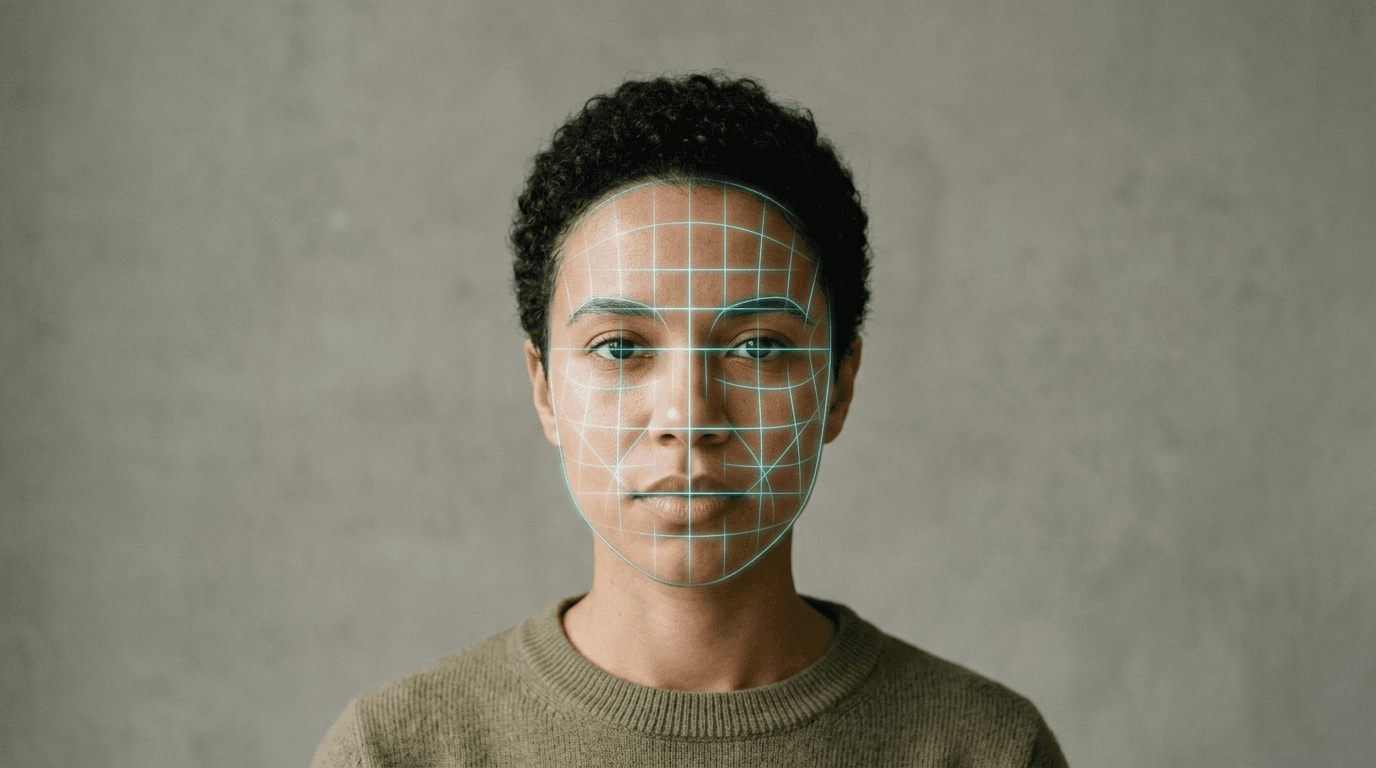
A successful consular appointment often hinges entirely on a single image. When an applicant sits down at the desk, the official feeds the submitted passport photo into a biometric scanner. If the distance between the pupils is too narrow, or a faint shadow touches the chin, the software rejects the file, and the application halts immediately. Securing a compliant document requires an exact understanding of biometric geometry, optical distortion, and international printing standards.
Quick Summary
A compliant biometric passport photograph must satisfy strict optical and dimensional criteria so that automated border control systems can extract facial landmarks.
- An Italy passport photo must measure exactly 35x45mm on physical prints.
- The applicant's face must fill the vast majority of the vertical frame, spanning from the chin to the crown of the head.
- Lighting must be entirely uniform, eliminating all drop shadows on the background and facial contours.
- Electronic validation checks specifically for neutral facial geometry and direct eye alignment with the camera lens.
Table of Contents
- What triggers automated rejection at the consulate
- How the Italian standard diverges from global norms
- Why lighting geometry matters more than camera resolution
- Where infant photography breaks standard biometric rules
- When to process digital files versus physical prints
- FAQ
- Recommended Reads
What triggers automated rejection at the consulate
Modern border control relies on facial recognition algorithms that measure the physical distances between specific facial landmarks. These systems operate under the ISO/IEC 19794-5 standard, which defines how biometric data is captured and stored. When you submit an image, the consulate's software attempts to map a grid over the face, locating the center of the eyes, the tip of the nose, and the corners of the mouth.
Rejections happen when the software cannot anchor this grid. Head tilt is the most common failure point. A slight rotation along the vertical axis (yaw) or horizontal axis (pitch) alters the apparent distance between the eyes. If an applicant tilts their head upward to face a camera held too high, the chin appears artificially elongated, and the biometric match fails.
Another frequent trigger is the presence of reflective glare. Glasses are generally discouraged, and heavy frames or tinted lenses will cause an immediate rejection. Even without glasses, oily skin or harsh direct flash can create a specular highlight over the cheekbones or forehead. The software interprets these bright white pixels as missing data, rendering the topographical map of the face incomplete. If you are preparing images for different jurisdictions, consulting global photo requirements across various regions can help identify overlapping biometric baselines.
How the Italian standard diverges from global norms
While the underlying facial recognition technology is largely standardized across the European Union, physical dimensions and formatting rules vary significantly by country. The standard specification for Italian passport photos requires a physical print measuring 35 millimeters in width by 45 millimeters in height. This European standard is narrower and taller than the 2x2 inch (51x51mm) square format used in North America.
The critical metric within that 35x45mm frame is the head size. The distance from the bottom of the chin to the crown of the head (excluding hair volume) must measure between 32mm and 36mm. This strict framing means the applicant's head dominates the image, leaving just enough negative space above the crown to prevent cropping during the passport manufacturing process.
Background color provides another strict constraint. Italy requires a plain white or off-white background with zero texture or pattern. The contrast between the subject and the background must be sharp enough for the software to perform automatic background segmentation. If a subject wears a pale shirt that blends into the white background, the algorithmic edge-detection fails, and the image is marked non-compliant. To see how these European criteria compare to other strict regimes, reviewing the Germany passport documentation standards illustrates the shared Schengen-area logic.
| Specification | Italian Requirement | US Requirement | Tolerance Level |
|---|---|---|---|
| Physical Dimensions | 35 x 45 mm | 2 x 2 inches (51x51mm) | Zero tolerance |
| Head Height | 32 - 36 mm | 1 - 1.375 inches | Strict adherence required |
| Background Color | Plain white or off-white | Plain white or off-white | No patterns allowed |
| Facial Expression | Strictly neutral, closed mouth | Neutral, closed mouth | Minor variations fail biometrics |
| Glasses | Permitted but heavily restricted | Explicitly forbidden | High risk of rejection |
Why lighting geometry matters more than camera resolution
Many applicants assume that a high-megapixel smartphone guarantees a compliant image. In biometric photography, sensor resolution is secondary to lighting geometry. A 12-megapixel sensor captures more than enough data to satisfy the 600 DPI (dots per inch) printing requirement, but if the lighting is directional, the photograph will fail.

Directional lighting creates shadows that the scanning algorithm misinterprets as physical facial features. A light source placed to one side of the applicant casts a drop shadow across the nose, making it appear wider or asymmetrical. Similarly, overhead lighting creates heavy shadows under the eyebrows and beneath the lower lip, distorting the jawline.
To achieve compliant lighting without studio equipment, the applicant must face a large, diffuse light source, such as a window covered by a sheer curtain, on an overcast day. This floods the face with flat, even illumination, eliminating topographical shadows. The camera operator should stand directly between the light source and the applicant, ensuring their own silhouette does not cast a shadow over the subject.
Practical rule: Position the subject facing the primary light source with the camera placed exactly at eye level; if you can see a shadow under the chin or beside the nose, the biometric scanner will see it too.
Flash photography introduces its own set of risks. An on-camera flash fired too close to the subject will cast a harsh drop shadow directly onto the white background behind them. Biometric standards dictate that the background must be entirely uniform. A visible shadow on the wall behind the ear is a routine cause for rejection at the consulate. For detailed technical guidance on resolving optical distortions, checking a dedicated troubleshooting resource can prevent basic capture errors.
Where infant photography breaks standard biometric rules
Photographing adults is straightforward because they can sit upright and follow instructions. Capturing an infant or newborn forces a departure from standard posing techniques, and consular officials apply specific, limited leniencies to accommodate infant physiology.
Newborns lack the neck strength to hold their heads up. The most reliable method for capturing their image involves laying the infant flat on their back over a plain white sheet. The camera operator shoots directly downward from above. This introduces a significant optical challenge: perspective distortion. If the smartphone lens is held too close to the infant's face, the wide-angle distortion inflates the size of the nose and stretches the forehead, altering the biometric grid. The camera must be held at least four feet away and zoomed in optically (using a 2x or 3x telephoto lens setting) to flatten the perspective.
While adults must exhibit a perfectly neutral expression with a closed mouth, infants under one year old are granted some leeway regarding open mouths. However, their eyes must remain open and clearly visible. Pacifiers, hands near the face, or parental fingers supporting the head are strictly forbidden. The automated background segmentation process cannot separate a parent's hand from the infant's cheek, resulting in an immediate formatting failure. Understanding how other jurisdictions handle these exceptions, such as the specific rules applied in US applications, highlights the universal difficulty of infant biometrics.
When to process digital files versus physical prints
Depending on how you apply for a document, you will either need a high-resolution digital file or physical paper prints. The technical constraints differ between these two delivery methods.
For digital submissions, the file must be formatted correctly before uploading. A digital passport format photo must retain a high pixel density without exceeding the government portal's maximum file size constraints, which are often strictly capped at a few megabytes. Compression algorithms can introduce JPEG artifacts - blocky pixelation around high-contrast edges, such as the boundary between the hair and the white background. If compression artifacts degrade the sharpness of the eyes, the file will be rejected online. The file must be saved in the sRGB color space to ensure the skin tones render accurately on the official's monitor.
When converting a digital file into a physical document, printing technology becomes the critical variable. Consulates require photographs to be printed on high-quality photographic paper using dye-sublimation or high-end inkjet processes. Standard home office laser printers leave microscopic halftone dot patterns that interfere with biometric scanning. To generate a 35x45mm image economically, the standard industry practice is to arrange multiple properly sized images onto a single 4x6 inch digital template. This template can then be printed at any commercial photo kiosk, maintaining the exact millimeter dimensions when cut out.
FAQ
Do Italian passport photographs require a specific background color?
Yes. The background must be plain white or off-white, with absolutely no texture, patterns, or visible shadows. The contrast must clearly separate the subject's outline from the background.
Can I wear my prescription glasses in the picture?
While theoretically permitted if the frames are thin and there is zero glare on the lenses, it is highly recommended to remove all glasses. Even a minor reflection or a frame obscuring a millimeter of the eye will result in automated rejection.
Does an infant need to have their eyes open for the photograph?
Yes. For newborns and infants, the eyes must be open and clearly visible to satisfy biometric capture requirements, though strict neutrality of the mouth is slightly relaxed for babies under one year old.
What type of paper is required for physical passport prints?
Physical photographs must be printed on dedicated, high-quality photographic paper with a high-resolution process (minimum 600 DPI) that does not leave visible dot patterns or printing artifacts.