Biometric Rules for Facial Alteration: A foto passaporto trucco Guide
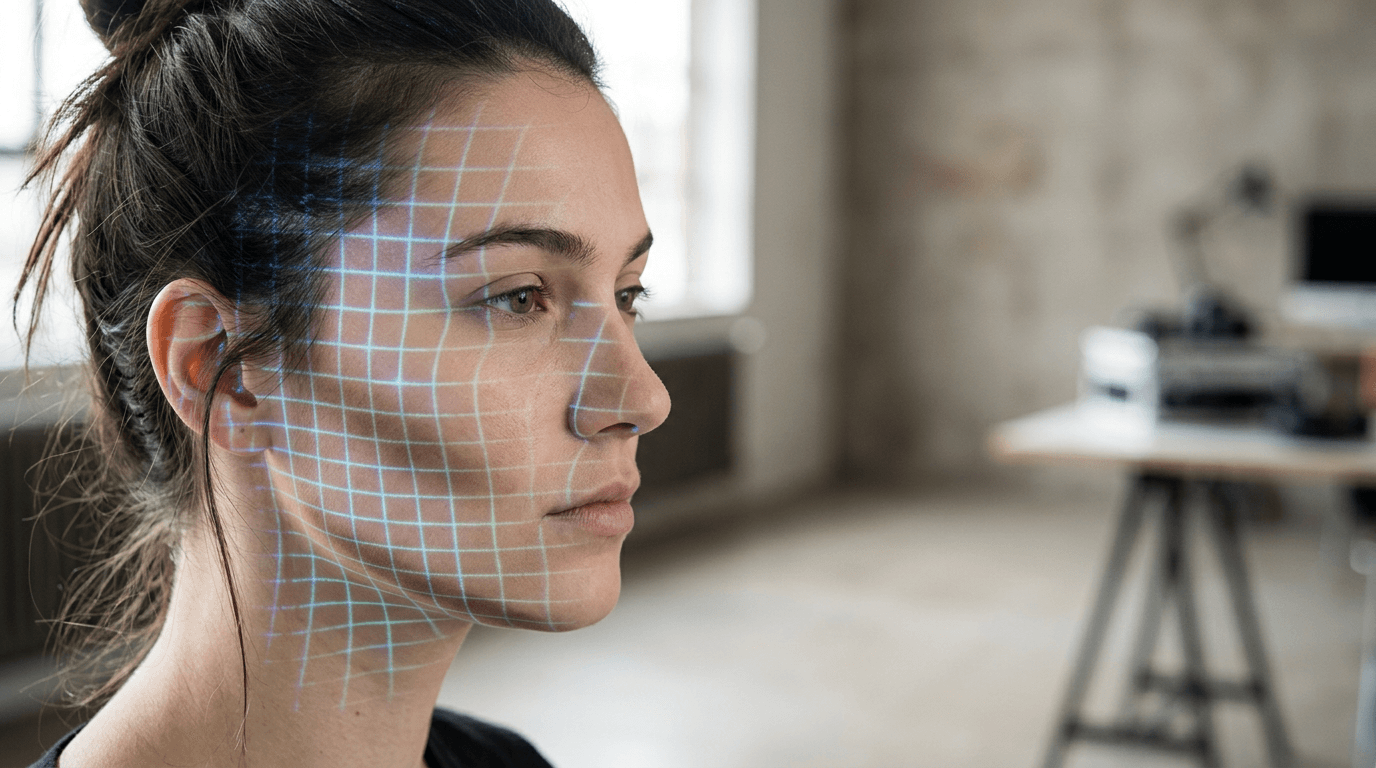
Biometric passport scanners do not process your face as a photograph; they read it as a three-dimensional topological map constructed entirely from contrast points and shadows. When you stand before a border control gate, the algorithm measures the exact millimeter distance between your pupils, the width of your nose bridge, and the depth of your eye sockets. Every cosmetic decision you make directly alters how light hits these critical anchor points. Applying standard cosmetic techniques to a biometric application is the leading cause of manual review flags and outright rejections. If you are preparing for a biometric scan, understanding how a foto passaporto trucco changes your structural data under a camera flash is the only way to ensure your documents pass the automated verification software.
Quick Summary
Biometric identification photography requires a bare-face geometric map, meaning any cosmetic application must avoid altering the natural shadows and contrast points of your bone structure.
- Contouring changes the perceived depth of your cheeks and nose, causing immediate algorithmic rejection.
- Silica-based setting powders and SPF foundations reflect camera flash, destroying facial edge detection.
- Heavy eyeliner and false eyelashes obscure the inter-pupillary distance, which is the primary biometric anchor.
- Permanent facial features, including scars and birthmarks, must never be concealed.
Table of Contents
- Contouring Alters Your Biometric Data During a foto passaporto trucco
- Foundation Flashback Destroys Facial Edge Detection
- Altering the Orbital Bone Geometry Guarantees Rejection
- Specular Highlights on the Lips Disrupt Secondary Anchors
- Permanent Blemishes Cannot Be Concealed Without Risk
- Diagnosing Surface Reflection and Shadow Errors
- FAQ
- Recommended Reads
Contouring Alters Your Biometric Data During a foto passaporto trucco
The core of facial recognition software relies on a network of approximately 80 nodal points mapped across your face. The distance between these points creates a unique numerical template that identifies you. Contouring relies on applying dark matte pigments to the hollows of your cheeks, the sides of your nose, and the perimeter of your forehead to create the optical illusion of depth. In standard photography, this flatters the face. In biometric photography, it corrupts the data.
When a camera flash hits contoured skin, the lens captures artificial shadows where natural light should be reflecting off your bone structure. The facial recognition algorithm interprets these artificial shadows as actual physical depth. If you contour your nose to look thinner, the software records a narrow bridge. When you reach a border crossing and stand under the flat, overhead fluorescent lighting of an e-gate, the scanner reads your natural, wider nose bridge. Because the physical geometry does not match the passport chip's data, the gate will not open, forcing a manual review by a border agent.
The most common mistake applicants make is "baking" their under-eye area with heavy translucent powder while applying bronzer below the cheekbone. This flattens the upper plane of the face entirely while exaggerating the lower half, removing the cheekbone anchor point that scanners rely on to measure facial width. While infant documentation relies entirely on natural features, as outlined in the United Kingdom baby passport photo guide, adult biometric scans fail precisely when temporary cosmetic shadows mimic permanent bone structure. If you choose to wear makeup, apply a single, uniform layer of color-matched base without any dimensional shading.
Foundation Flashback Destroys Facial Edge Detection
Biometric identification images are captured under harsh, direct flash photography to eliminate environmental shadows. This specific lighting setup reacts violently to certain chemical compounds found in everyday cosmetics. Titanium dioxide, zinc oxide, and silica are highly reflective particulate ingredients common in daily moisturizers, sunscreens, and setting powders.

When the camera flash fires, these particles act as millions of microscopic mirrors, bouncing the burst of light directly back into the lens. This chemical reaction creates a phenomenon known as flashback, which casts a stark white overlay across your face in the resulting image. Biometric software utilizes edge detection algorithms to separate your jawline from your neck and your hair from the background. Flashback blows out the contrast between your face and the surrounding areas, causing the algorithm to register a continuous white void instead of a distinct facial perimeter.
Parents handling multiple family applications at once - often consulting a United States baby passport photo guide for their children alongside their own requirements - routinely fail their own background checks because their daily SPF foundation triggers this exact white-cast error under the camera flash.
The mistake here is assuming that a product labeled "photo-ready" applies to flash photography. Many commercial products are formulated to look good under natural daylight or continuous studio lighting, not the instantaneous burst of a passport camera.
Practical rule: Test your base coverage by taking a flash photograph of yourself in a completely dark room; if your face appears more than one shade lighter than your neck, you must switch to a purely matte, non-SPF formula for your application.
Altering the Orbital Bone Geometry Guarantees Rejection
The inter-pupillary distance - the exact measurement between the center of your left pupil and the center of your right pupil - is the primary structural anchor for every facial recognition system worldwide. To measure this accurately, the software must be able to define the absolute borders of your eyes.
Applying heavy winged eyeliner extends the visual boundary of your eye outward toward your temple. When the software scans the image, it attempts to find the outer corner of the eye to calculate the orbital width. The dark pigment of the eyeliner tricks the edge detection algorithm into registering the end of the makeup wing as the physical end of the eye. This artificially widens your orbital measurements, rendering the data mathematically invalid against your actual face.
False eyelashes introduce a different physical failure. Thick eyelash strips protrude outward from the lid. When the overhead flash fires, these extensions cast micro-shadows directly downward over the iris and the sclera (the white of the eye). If a shadow obscures even a fraction of the pupil, the system cannot lock onto the center point to measure the inter-pupillary distance. Automated systems cannot distinguish between a natural shadow and artificial interference, a standard strictness you will also see documented in the Australian baby passport photo guide regarding acceptable contrast around the eyes.
The most frequent mistake is applying a "cat-eye" shape to alter round eyes into an almond shape. The biometric requirement is to document your face exactly as it exists. If you apply eyeliner, it must sit strictly within the natural lash line, and mascara must not clump thick enough to cast a shadow on the eyeball itself.
Specular Highlights on the Lips Disrupt Secondary Anchors
The width of the mouth, measured from corner to corner when closed and relaxed, serves as a vital secondary structural anchor. The biometric software maps the contrast line where the upper and lower lips meet, as well as the defined border where the lip tissue meets the surrounding skin.
Using lip gloss, lip oils, or high-shine lipsticks introduces moisture and reflective oils to the surface of the mouth. When hit by a camera flash, these reflective surfaces create specular highlights - tiny, intense points of pure white light. Edge detection software interprets these bright white spots as physical gaps, structural distortions, or foreign objects resting on the face rather than a reflection of light. Because the algorithm cannot map a continuous contrast line across the mouth, it rejects the image as unreadable.
Overlining the lips is an equally fatal error. Drawing lip liner outside the natural vermilion border artificially extends the width and height of the mouth. This alters the calculated distance from the bottom of the nose to the top of the upper lip, a specific nodal measurement used to verify identity.
Applicants often mistake a neutral or "nude" gloss for a safe option because the color is subtle. The failure mechanism is the texture, not the pigment. To pass the automated scan, any lip color applied must dry down to a completely flat, matte finish that matches the natural border of the mouth without catching light.
Permanent Blemishes Cannot Be Concealed Without Risk
Biometric identification does not judge aesthetic perfection; it maps permanent identifying features. Scars, heavy freckling, birthmarks, and permanent hyperpigmentation are critical data points that assist border control systems and human agents in verifying your identity.
When people research come fare foto passaporto to handle their applications at home, they often apply heavy, full-coverage concealers to hide surgical scars or natural blemishes. Covering a permanent facial feature actively degrades the accuracy of your biometric profile. In many jurisdictions, intentionally concealing a permanent identifying mark on a government document application is classified as an alteration of physical identity and can be grounds for immediate rejection or passport revocation.
The mechanics of this failure happen during the manual review phase. If the automated e-gate fails to read your face because of a lighting shift or a system error, a border agent will look at the physical photograph on your passport and compare it to your face. If your passport photo shows flawless, uniform skin, but you have a distinct two-inch surgical scar on your jawline in reality, the agent has grounds to detain you for document fraud.
The standard mistake is using a color-correcting concealer palette to neutralize the redness of a permanent birthmark. If a mark is permanent, it belongs on your passport. Only temporary blemishes, such as an active breakout or temporary bruising from a recent injury, should be lightly concealed, as they will not be present on your face during future travel.
Diagnosing Surface Reflection and Shadow Errors
When an application is rejected for poor image quality, the government notice rarely specifies exactly which cosmetic product caused the failure. Because different application techniques trigger different algorithmic failures, you must diagnose the root cause by looking at the specific symptoms in the rejected image.
The Floating Head Error (Edge Detection Failure)
- Symptom: In the printed or digital photo, your face looks stark white and appears completely detached from your neck, which retains its natural color. The jawline has no distinct border.
- Cause: Flashback from silica powder or titanium dioxide in an SPF foundation.
- Fix: Wash your face completely, remove all products containing SPF or mineral sunscreens, and apply a matte, flash-friendly foundation that exactly matches your neck.
The Obscured Iris Error (Anchor Point Failure)
- Symptom: The whites of your eyes look grey, or your pupils are indistinguishable from your iris. If you submit a foto passaporto italiano with this error, the consulate's automated system will flag the document instantly, as European Schengen rules strictly prohibit any ocular obstruction.
- Cause: Long, dense false eyelashes or heavy eyelash extensions are casting a downward shadow directly over the eyeball.
- Fix: Remove the false eyelashes. If you have permanent extensions, you must tilt your chin slightly up to allow light to hit the iris without casting a shadow, ensuring you do not tilt so far that you expose your nostrils unnaturally.
The Flattened Bridge Error (Geometry Failure)
- Symptom: The center of your face looks entirely flat, and the bridge of your nose is barely visible in the photograph, blending entirely into your cheeks.
- Cause: Over-application of matte setting powder on the center of the face combined with an overly bright frontal flash, which destroys the natural contrast shadows of the nose.
- Fix: Use a single light source slightly further away, and remove heavy powders from the T-zone to allow your natural skin texture to retain some dimensional contrast.
The False Jawline Error (Contrast Failure)
- Symptom: Your neck looks unnaturally dark, or there is a thick, muddy shadow running along the bottom of your face that does not match the lighting of the room.
- Cause: Applying dark bronzer beneath the jawbone to create a sharper jawline.
- Fix: Remove all bronzer from the lower half of the face. The camera flash must be allowed to capture where your jaw physically ends and your neck naturally begins. Similar principles apply across international borders; a shadow created by bronzer will fail the strict contrast checks documented in the Canadian documentation procedures just as easily as it fails US systems.
FAQ
Can I wear my everyday foundation for a biometric picture? No, unless your everyday foundation is entirely free of Sun Protection Factor (SPF) and silica. Daily wear foundations often contain titanium dioxide or zinc oxide to protect against UV rays. These ingredients reflect camera flash violently, causing a white-cast error that destroys the edge-detection algorithms used to map your jawline.
Will covering a permanent scar cause my photo to be rejected? Yes. Biometric identification systems and border agents rely on permanent marks, scars, and birthmarks to verify your identity during manual reviews. Concealing a permanent feature alters your structural geometry and is considered an unauthorized alteration of your physical identity.
Are eyelash extensions allowed in biometric photography? They are highly discouraged and often result in rejection. Eyelash extensions typically protrude further than natural lashes, casting micro-shadows directly over the iris when hit by an overhead camera flash. If a shadow obscures any part of your pupil, the software cannot measure your inter-pupillary distance, which is the primary anchor point for facial recognition.
Can I use digital beauty filters instead of physical makeup? Absolutely not. Applying any form of digital airbrushing, beauty filter, or red-eye reduction software alters the pixel data of the image. Government biometric scanners analyze the file metadata and pixel consistency; detecting a digital filter results in an automatic rejection and can flag the applicant for suspected document manipulation.