Biometric Photo Grooming Standards: Navigating the foto passaporto trucco Rules
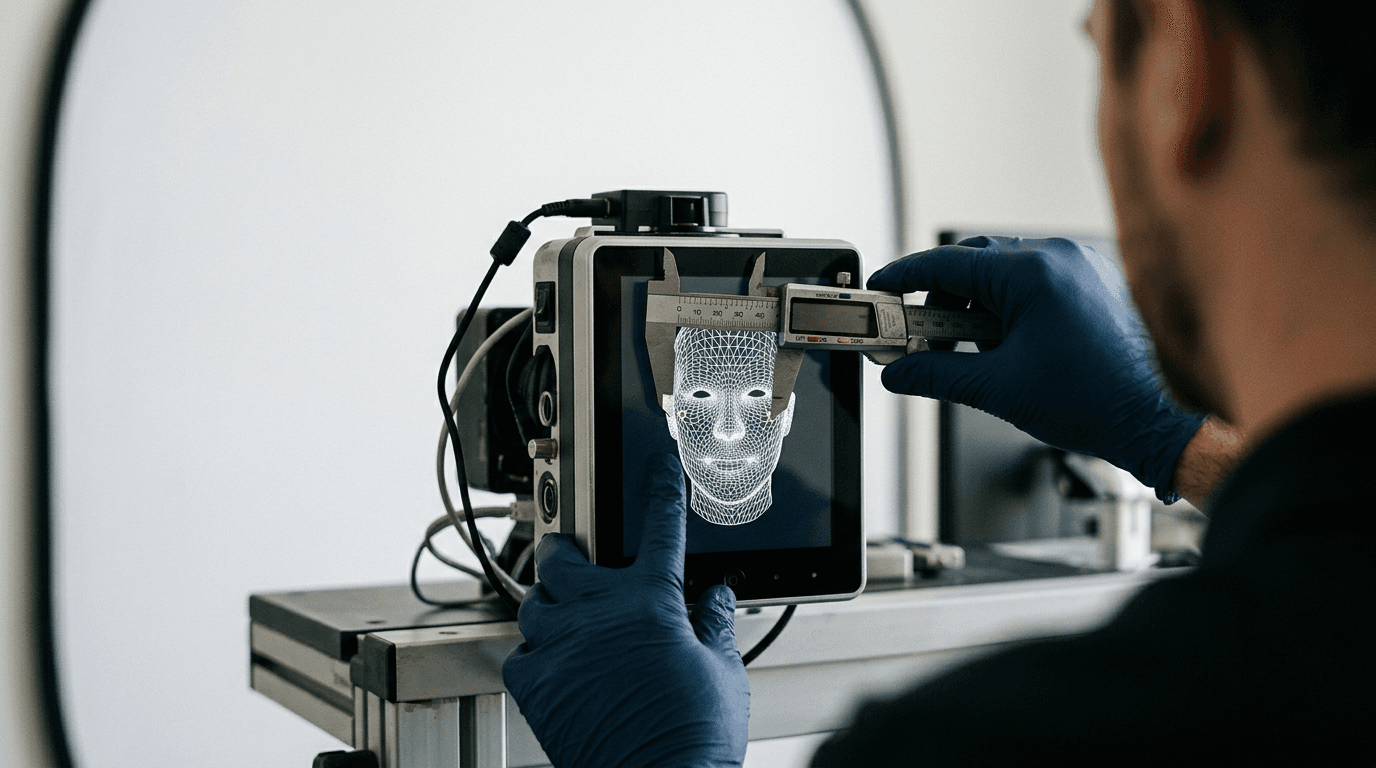
Handing a completed passport application to a consulate clerk, only to have the supporting documents rejected because light-reflecting foundation altered the facial geometry on the printed image, is a specific and entirely avoidable failure point in international travel preparation. When searching for the exact foto passaporto trucco standards to apply before capturing an image, applicants quickly realize that official biometric systems do not view human faces the way portrait cameras do. These digital systems scan strictly for nodal points - the exact millimeter distance between the pupils, the width of the nose bridge, and the depth of the eye sockets. Whether the local immigration office requests a standard digital visa image or a printed fototessera o foto tessera, any grooming choice that obscures or fakes these geometric markers results in automatic rejection by the verification software.
Quick Summary
Biometric passport photos require grooming and styling choices that preserve the natural geometry of the applicant's face without introducing shadows, glare, or false contours. Government verification software scans for exact distances between facial features, meaning any cosmetic alteration that shifts these perceived measurements will trigger an automatic application denial.
- Foundation and powders must be completely matte to prevent flash reflection from generating false biometric hotspots on the skin.
- Contouring or highlighting shifts the perceived distance between facial nodes and is strictly prohibited by official guidelines.
- Hair must be secured firmly away from the jawline and eyebrows to expose the face's true structural edges to the edge-detection algorithms.
- Skincare products containing physical sunscreens often cause severe white-cast under flat lighting, leading to exposure failures.
Table of Contents
- 1. Map the foto passaporto trucco Baselines
- 2. Eliminate Contouring and Highlighting
- 3. Strip Away Reflective Skincare Products
- 4. Secure Hair to Expose Facial Edges
- 5. Standardize Eye Visibility and Lash Length
- Common Pitfalls & Troubleshooting
- FAQ
- Recommended Reads
1. Map the foto passaporto trucco Baselines
Why Nodal Geometry Overrides Human Perception
Digital systems read human faces mechanically. Strict global standardization protocols govern official biometric photography. Guidelines like ISO/IEC 19794-5 dictate exactly how this works. When a digital passport photo generator processes an uploaded image, it strips away color and assesses the pixel contrast. This builds a 3D topographical map of the face. The software relies on finding distinct edges to calculate measurements. The algorithm measures the distance from the chin to the crown of the head, and calculates the specific width of the face at the cheekbones. If an applicant uses cosmetics to soften their jawline, the algorithm simply records a narrower jawline. When that applicant later stands in front of an infrared facial scanner at an automated airport e-gate, the physical read of their bone structure will not match the encoded data on the passport chip, triggering a security flag.
The Mapping Mistake Applicants Repeat
The core error most people make is applying everyday cosmetic principles to an official document capture. Portrait photography is designed to flatter the subject by softening harsh features and masking asymmetry. Biometric photography is designed to document that exact asymmetry as a unique identifier. Attempting to artificially balance uneven eyebrows or slim down a round face directly degrades the data the government needs. You can verify this baseline right now: wash your face completely clean and stand facing a window with indirect sunlight. The shadows that naturally form under your nose and chin are the exact, unaltered shadows the camera needs to see. For parents preparing documents, consulting the specific United Kingdom baby passport photo requirements reveals that even mild milk residue on an infant's chin can disrupt this mapping, as the camera misinterprets the resulting glare as a structural anomaly.
2. Eliminate Contouring and Highlighting

Painted Shadows Alter Facial Topography
Contouring involves placing dark, matte powders in the hollows of the cheeks and along the jawline to create the illusion of depth, while placing luminescent highlighters on the cheekbones to simulate raised structures. Because automated verification systems rely entirely on lighting contrast to judge the physical depth of a face, applying artificial shadows completely breaks the algorithmic read. If you paint a shadow down the sides of your nose, the biometric engine registers a physically thinner nasal bridge. The computer does not recognize makeup; it only recognizes pixel density. When an engine performs its automated checks for shadow and glare detection, artificially placed highlights trigger an immediate failure because they mimic the glare of harsh, non-compliant studio lighting.
What to Check Under Harsh Lighting
Will your skin pass the topographical test? Examine it under a harsh, direct flash before taking the final photo. Take a test picture using your smartphone's front-facing flash in a dark room. If the image shows distinct, painted dark stripes on the sides of the face, or if the tip of the nose reflects a bright white dot, the image is biometrically invalid. The skin must look entirely flat. Its color distribution must remain uniform. Those relying on the United States baby passport photo guidelines should know that this rule applies universally to infants as well; applying lotions or heavy creams to soothe a baby's dry skin right before a photo will cause the exact same rejection-triggering highlights.
3. Strip Away Reflective Skincare Products
Physical Filters Obliterate Bridge Depth
Many daily moisturizers and sunscreens rely on physical mineral filters, specifically titanium dioxide and zinc oxide, to protect the skin. These ingredients operate by sitting on top of the epidermis and physically bouncing light rays away from the face. When struck by a camera flash or bright continuous LED lighting, these minerals reflect the light straight back into the camera lens. This causes an extreme phenomenon known as flashback. In a biometric photo, flashback washes out the center of the face, effectively erasing the bridge of the nose and blending it seamlessly into the cheeks. Without the contrast of the nose bridge, the software cannot calculate the depth of the eye sockets.
The White-Cast Washout Consequence
When a face is washed out by reflective skincare, the edge-detection algorithms fail to separate the facial features from one another. The image becomes overexposed in specific patches, creating what the software interprets as holes in the applicant's facial structure. This is a severe compliance violation that cannot be fixed by lowering the exposure in post-processing, as the data in those blown-out pixels is permanently gone.
Practical rule: Wash your face with a standard cleanser and leave the skin entirely bare of all moisturizers, serums, and sunscreens for the five minutes it takes to capture the photograph.
4. Secure Hair to Expose Facial Edges
Perimeter Obscuration Fails Edge Detection
Facial recognition software must find the distinct outer boundary of the head to measure overall proportions. Automated systems calibrate the head size to fit exact specifications - for example, ensuring the head measures precisely between 25 and 35 millimeters from the bottom of the chin to the top of the hair on a printed submission. If thick hair falls forward and covers the edges of the jaw, the software cannot locate the chin's true boundary. Similarly, hair that obscures the eyebrows hides a critical horizontal nodal line used to measure the upper third of the face. Reviewing the Australia baby passport photo rules demonstrates how strict this boundary definition is, as parents are often required to gently hold an infant's hair away from their forehead to expose the necessary features.
The Shadow Cast by Loose Strands
Beyond simply covering the face, loose wisps of hair cast sharp, black shadows across the skin when illuminated by a flash. A single strand of hair crossing the cheekbone can cast a shadow that the verification software interprets as a facial scar or a deep structural crease. Because biometric data must remain accurate for a decade, registering a temporary hair shadow as a permanent facial scar guarantees future verification failures at border crossings. Hair must be pulled back cleanly, and any flyaways should be smoothed down with water or a matte styling paste.
5. Standardize Eye Visibility and Lash Length
Interpupillary Distance is the Primary Anchor
The distance between the center of the left pupil and the center of the right pupil is the foundational measurement in biometric mapping. Every other geometric calculation on the face is scaled relative to this single baseline. If the software cannot cleanly identify the pupil and the surrounding iris, the entire mapping process fails. Thick, dark eyeliner applied heavily to the waterline physically shrinks the visible area of the sclera (the white of the eye), confusing the software regarding the exact boundaries of the eye socket.
The False Eyelash Obstruction
Wearing voluminous false eyelashes or heavy coats of lengthening mascara creates a physical awning over the eye. Under top-down or frontal lighting, these lashes cast a thick shadow directly over the pupil and the top half of the iris. To an automated system, a shadow covering the top half of the eye registers identically to a half-closed eyelid. The image is instantly flagged for an "eyes closed" violation. This requirement is unbending across global jurisdictions; checking the Canada baby passport photo guidelines confirms that even for infants, the eyes must be fully open, clearly visible, and free of any surrounding shadows that might obscure the iris.
Common Pitfalls & Troubleshooting
When preparing images at home, applicants frequently encounter rejections that look identical on the surface but stem from entirely different root causes. Understanding exactly what the software flags is the only way to apply the correct fix.
- Specular Highlights on the Forehead: The software rejects the photo citing "uneven lighting" or "glare." The symptom is a bright, white, glowing dot in the center of the forehead or on the tip of the nose. This is the most common real cause of automated rejection for self-captured photos, and it stems from natural skin oils reflecting the flash. The fix is not to change the lighting, but to blot the skin firmly with a dry tissue immediately before pressing the shutter.
- The Floating Head Effect: The rejection notice claims the background cannot be separated from the subject. The symptom occurs when the applicant wears a plain white shirt against a white wall. The AI edge-detection cannot distinguish where the applicant's shoulders end and the wall begins, causing the torso to disappear into the background. The fix is to change into a dark, high-contrast garment that clearly separates the body from the background.
- Asymmetric Background Shadows: The system flags the image for background obstruction. The symptom is a dark, blurry halo on one side of the applicant's head on the wall behind them. This happens when standing too close to the wall with a single light source pointing slightly off-center. The fix is to step at least 18 inches away from the wall to let the shadow fall out of the frame, and to face the light source directly.
- The Squint Distortion: The rejection cites altered facial features or closed eyes. The symptom is the applicant slightly narrowing their eyes due to staring directly into a harsh ring light or camera flash. The fix is to turn off continuous artificial lights and instead stand facing a large window with natural, indirect daylight, allowing the face to remain entirely relaxed. For general troubleshooting on lighting setups, reviewing a comprehensive Help Center can clarify exactly how to balance ambient light.
FAQ
Can infants wear daily moisturizers for their passport photos?
No. Any lotion or cream left on a baby's skin will catch the light and create a glare. The skin must be gently wiped dry with a clean cloth immediately before capturing the image to ensure a completely matte surface.
Does wearing clear lip gloss cause biometric rejection?
Yes. Glossy lip products reflect light, creating a bright white line across the mouth. The software relies on the natural, unreflective contrast of the lip line to measure the width of the mouth. A matte balm is the only acceptable alternative if lips are severely dry.
Are clear, non-tinted prescription glasses allowed if they have anti-reflective coatings?
Generally, no. Most countries have entirely banned eyeglasses in biometric photos because even premium anti-reflective coatings fail to stop the frames themselves from casting micro-shadows across the eye sockets. The frames interrupt the edge-detection algorithms tracking the cheekbones and orbital bones.
How can I check if my grooming choices meet international standards?
Because exact head-size dimensions and background color requirements vary by jurisdiction, you must align your matte, un-contoured face with local rules. Consulting a directory of global passport photo requirements allows you to verify the specific mm-measurements and background contrasts mandated by the country issuing your document.
What if a permanent facial feature is mistaken for a makeup shadow?
True facial features, such as deep-set eyes or natural birthmarks, possess consistent pixel density that the AI recognizes. Cosmetic shadows change density abruptly and lack the natural gradient of human skin. If you light your face flatly from the front, the AI will accurately differentiate between your actual bone structure and a painted contour.