Biometric Compliance and Passport Photo Standards for 2026
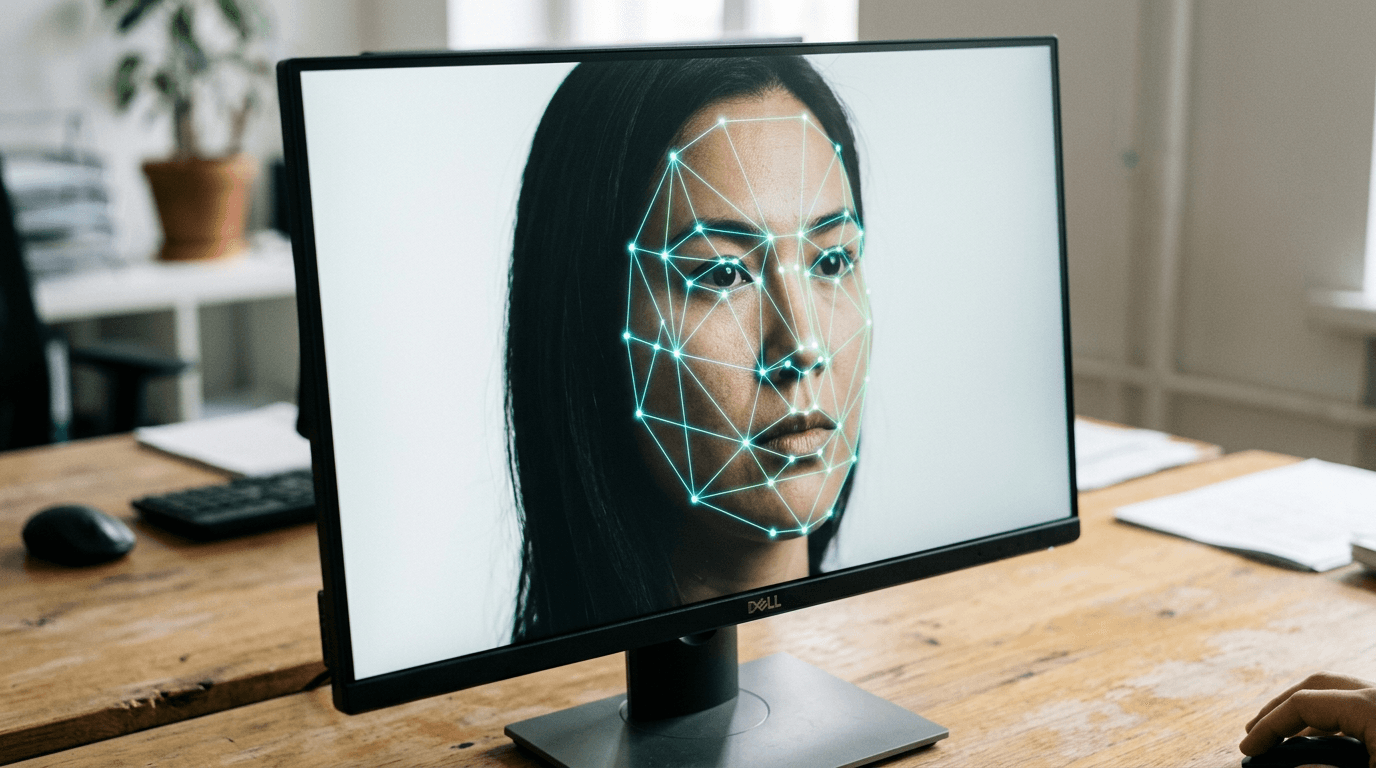
You upload your digital file to the government application portal, the progress bar spins for five seconds, and a red banner appears: "Biometric validation failed: Interpupillary distance not within accepted parameters." Getting a valid passport photo in 2026 is no longer about sitting on a stool at a pharmacy while a flash fires in your face. It is an exercise in strict biometric data compliance, where algorithms map your facial geometry before a human ever sees the file.
Quick Summary
A compliant travel document image is a standardized biometric dataset used by facial recognition software to verify identity at automated border control gates.
- Automated systems reject images for invisible errors like lens distortion and edge-detection artifacts.
- Smartphone cameras require specific focal distances to avoid warping facial proportions.
- Infant submissions fail at the highest rates due to distinct geometric requirements.
- Digital background removal algorithms often trigger government manipulation filters.
- Regional standards vary drastically in dimensions and required head proportions.
Table of Contents
- Why international travel documents reject a standard headshot
- How automated verification systems measure facial geometry
- Where background removal algorithms fail government standards
- What happens when infant proportions break standard templates
- How lens distortion ruins digital submission compliance
- Which passport format photo standards differ by region
- Who should avoid generating a travel document image at home
- FAQ
- Recommended Reads
Why international travel documents reject a standard headshot
The core standard governing global travel documents is Document 9303, maintained by the International Civil Aviation Organization (ICAO). This framework dictates that a travel image is not a portrait, but a machine-readable map of your face. When you submit a file, government processing software analyzes it to establish a baseline for automated border control systems (eGates).
A standard headshot fails this process because modern portrait photography prioritizes aesthetics over anatomical accuracy. Portrait modes on modern devices artificially blur the background to create depth of field, a process known as computational bokeh. While visually pleasing, this blur degrades the sharp pixel boundary along the ears and the crown of the head. When the border control algorithm attempts to measure the precise width of your skull, it encounters soft pixels and returns a measurement error.
Furthermore, professional headshots routinely utilize directional lighting to create defining shadows across the cheekbones and jawline. In biometric imaging, shadow is interpreted as structural mass. A shadow cast across one side of the nose alters the algorithm's calculation of the nose's volume and shape, resulting in immediate rejection. The illumination must be entirely flat, shadowless, and neutral in color temperature to capture the true topography of the face.
How automated verification systems measure facial geometry
Government software does not evaluate whether an image looks like you; it measures the spatial relationships between specific nodal points on your face. The most critical measurement is the interpupillary distance - the exact gap in millimeters between the centers of your left and right pupils.

Once the software locates the pupils, it establishes a vertical and horizontal axis. It measures from the bottom of the chin to the top of the head (excluding hair volume) to determine the head's total vertical space within the frame. Every country specifies a strict percentage of the image that the head must occupy. If you crop the image too tightly, the head exceeds the maximum percentage, and the software flags the geometry as invalid.
Practical rule: Never crop a digital submission yourself before uploading it to a government tool, as manual cropping almost always alters the required head-to-image ratio and triggers an automated rejection.
The system also maps the distance from the tip of the nose to the chin, and from the outer corner of the eyes to the edges of the face. This is why a neutral expression is a non-negotiable requirement. Smiling pulls the corners of the mouth upward and outward, elevating the cheeks and narrowing the visible surface area of the eyes. This muscular shift changes the distance between your facial landmarks. A machine trained on a smiling photo will fail to recognize you when you stand with a relaxed face at a border checkpoint.
Where background removal algorithms fail government standards
Many applicants attempt to take a picture against an unsuitable wall and use consumer software to drop out the background. This introduces a high risk of rejection due to digital manipulation detection. Government portals employ forensic algorithms designed to detect tampering, and background removal tools leave distinct digital signatures.
The failure mode occurs at the pixel boundary layer. When consumer AI clips a subject from a background, it struggles with semi-transparent elements like loose hair, reflections, and the natural light wrap that occurs at the edges of a physical body. The software either deletes the fine wisps of hair, creating an artificially smooth, helmet-like edge, or leaves jagged pixels of the original background entangled in the hair.
When you submit this file, the government's forensic tool analyzes the pixel gradation. In an unaltered photo, the transition from hair to background spans several pixels of mixed color values. In a digitally clipped image, the transition is mathematically abrupt. The system detects this synthetic edge, assumes the image has been heavily retouched or spoofed, and rejects it.
If you intend to make a passport photo using digital tools, the software used must employ biometric-specific extraction that preserves natural edge gradation rather than standard marketing-focused background clipping.
What happens when infant proportions break standard templates
Capturing compliant biometrics for babies presents a distinct set of mechanical challenges, primarily because infant anatomy does not fit the standard adult verification template. Newborns lack the neck strength to sit upright, and their chin-to-chest definition is practically non-existent, which routinely confuses algorithms programmed to locate the bottom of the jaw.
The standard method for obtaining an infant image involves laying the child flat on a plain white sheet and shooting from directly above. However, this introduces gravitational changes: the facial tissue spreads backward, flattening the natural contours. Additionally, overhead ceiling lights cast deep shadows downward onto the white sheet, violating the shadow-free requirement.
Governments recognize these physical limitations and apply modified algorithms for minors under the age of one. For instance, the United States Baby Passport Photo Guide outlines that while a child's eyes must generally be open, the strict rules against a slightly parted mouth are often relaxed for newborns.
However, the geometric spacing remains rigid. The child's head must still occupy the correct vertical percentage of the frame, and no supporting hands, pacifiers, or toys can be visible. A parent's finger supporting the back of the infant's head will be detected by the software as a foreign object within the background plane, leading to an automatic failure. If you are preparing a United Kingdom Baby Passport Photo Guide submission, you will also notice that the background must be pale gray or cream, meaning a pure white crib sheet will actually result in rejection due to lack of contrast against pale infant skin.
How lens distortion ruins digital submission compliance
The hardware you use fundamentally dictates the geometry of the final image. Standard smartphone cameras utilize wide-angle lenses, typically featuring a focal length between 24mm and 26mm. These lenses are engineered to capture wide fields of view, but they introduce severe barrel distortion when placed close to a subject.
If you hold a smartphone 18 inches away from your face to take a picture, the lens magnifies the center of the frame and pushes the edges backward. The physical result is that the nose is rendered significantly larger than reality, the ears disappear behind the cheekbones, and the interpupillary distance is stretched. When a border control system scans your physical face from a standard distance, the biometric map will not match the distorted map stored on your digital chip.
Practical rule: To eliminate barrel distortion and capture accurate facial geometry, the camera lens must be positioned a minimum of four to six feet away from the subject, relying on optical zoom rather than physical proximity to frame the face.
You cannot fix lens distortion with software without altering the fundamental biometrics of the face. The only solution is physical distance. This is why relying on a dedicated Baby Passport Photo Maker platform or specialized software requires the user to hand the camera to another person or use a tripod, ensuring the focal plane remains flat and the facial features remain anatomically correct.
Which passport format photo standards differ by region
Assuming one universal size applies globally is a frequent cause for delayed applications. A passport format photo must adhere to the exact dimensional and background constraints of the issuing authority. Submitting a European standard image for an American application guarantees rejection.
The differences are not merely in outer dimensions, but in the specific scaling of the head within that frame. For example, a Canada Baby Passport Photo Guide submission requires a significantly larger physical print, demanding more visible space across the shoulders compared to the tighter crop of the American standard.
| Region / Country | Physical Dimensions | Head Height Requirement | Mandated Background Color |
|---|---|---|---|
| United States | 2 x 2 inches (51 x 51 mm) | 1 to 1 3/8 inches (25 - 35 mm) | Pure white or off-white |
| United Kingdom | 35 x 45 mm | 29 to 34 mm | Pale gray or cream (no white) |
| Canada | 50 x 70 mm | 31 to 36 mm | Pure white or light-colored |
| Australia | 35 x 45 mm | 32 to 36 mm | Plain light gray or cream |
| Schengen (EU) | 35 x 45 mm | 32 to 36 mm | Light gray or light blue |
The background color distinction is particularly critical. The United Kingdom and Australia actively reject pure white backgrounds because they create poor contrast against fair skin or white hair, making it difficult for the biometric scanner to locate the true boundary of the subject's head. Before submitting a passport photo online, you must verify the specific background hex code requirements of the destination country, as algorithms measure contrast ratios to a degree the human eye cannot perceive.
Who should avoid generating a travel document image at home
While software solutions handle crop scaling and biometric mapping, they cannot solve physical environmental failures or biological constraints. Certain applicants should bypass digital home generation entirely and visit a specialized professional studio equipped with lighting rigs and physical support mechanisms.
First, individuals requiring specific medical devices, such as large head supports, oxygen tubes, or complex corrective eyewear that cannot be removed, should use a professional studio. Digital systems are programmed to flag foreign objects in the frame. A professional studio photographer can manually adjust multi-point flash systems to eliminate the shadows cast by medical equipment, preventing the software from misinterpreting a shadow as a facial deformity.
Second, individuals who cannot physically achieve balanced, dual-source lighting in their environment should not attempt this process. If your only light source is a window on one side of your face, one cheek will inevitably map darker than the other. If you cannot place a secondary bounce light to fill the shadow side, your facial topography will fail the symmetry check.
Finally, applicants who are physically unable to maintain a rigid, unsupported posture for the duration of the shot - aside from infants, whose rules we have covered - often struggle with the alignment axis. If a subject leans slightly forward, the camera looks down on the face, artificially lengthening the forehead and shortening the chin. Without a photographer physically guiding the posture and adjusting the camera height to exactly match the eye line, the resulting geometry will be invalid.
FAQ
Can I wear prescription glasses in a travel document picture?
No. The ICAO Document 9303 standard strictly prohibits glasses in nearly all modern travel documents. Even anti-reflective lenses cast microscopic glares that obscure the iris, and the frames inherently cast shadows across the cheekbones and orbital sockets, disrupting the biometric mapping of the eye area.
How recent does the image need to be for a valid application?
The standard requirement is that the image must have been taken within the last six months. However, the true metric is your current appearance. If you have undergone significant facial surgery, experienced substantial weight changes, or added prominent facial tattoos within that six-month window, a newer image is required to ensure the biometric data matches your current physical state.
What exactly constitutes a neutral expression?
A neutral expression requires the facial muscles to be entirely relaxed. The mouth must be closed with no visible teeth, the eyes must be open and looking directly at the center of the lens, and the eyebrows cannot be raised or furrowed. Any muscular tension that alters the resting volume of the cheeks or the width of the eyes will result in biometric failure.
Does the final submission need to be printed on glossy or matte paper?
If you are submitting physical copies, requirements vary strictly by country. The United States requires glossy or matte photo-quality paper, while the United Kingdom explicitly demands standard photographic paper and rejects heavy card stock or standard printer paper. For digital submissions, the file must usually be an uncompressed JPEG or PNG format to prevent compression artifacts from degrading the edge boundaries.