Understanding Misura Foto Passaporto and International Passport Format Requirements for 2026
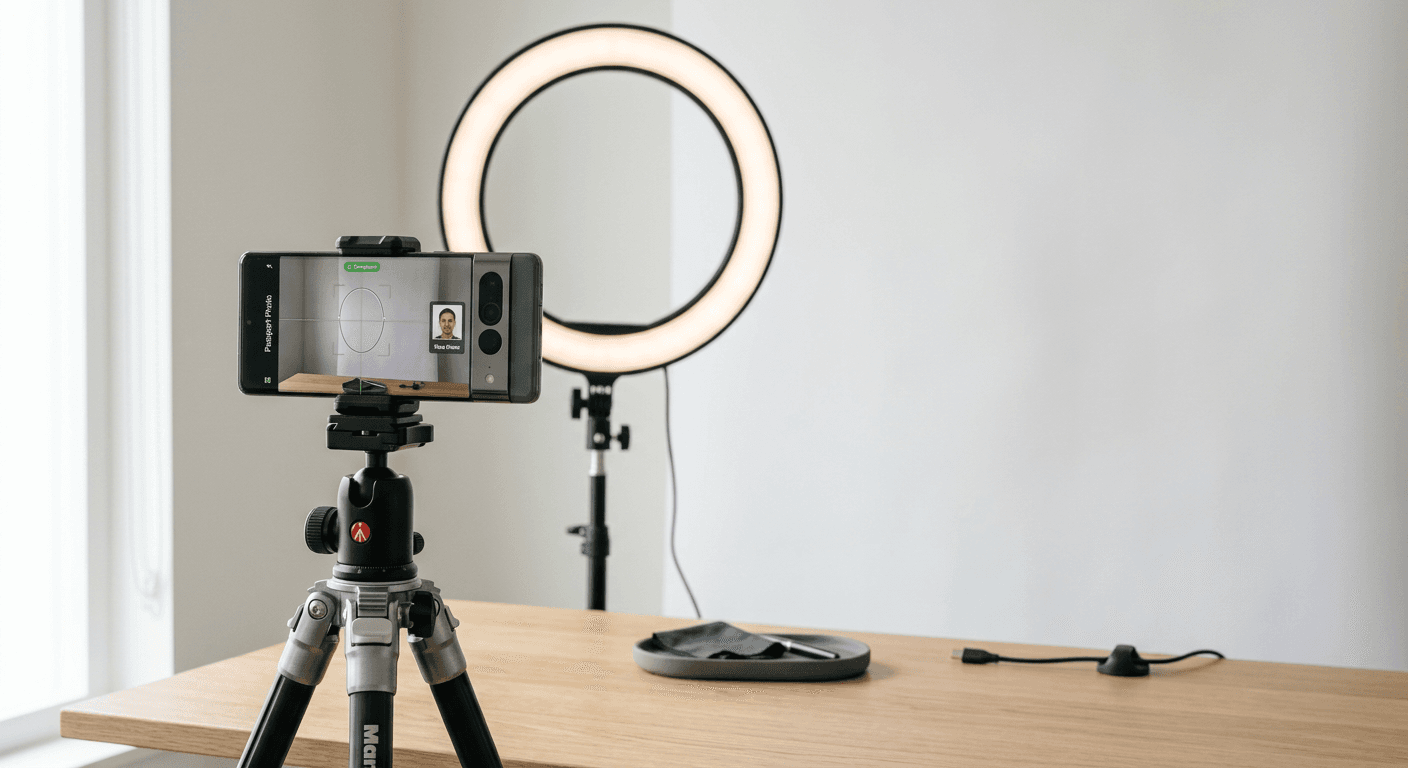
Obtaining the correct travel documentation starts with mastering the specific misura foto passaporto required by your destination country. Whether you are applying for a new passport, a visa, or renewing an existing document, the formato foto passaporto is strictly regulated to ensure facial recognition software can process the image effectively. Failure to adhere to these biometric standards often leads to application delays or outright rejection by government authorities.

Quick Summary {#quick-summary}
Selecting the right dimensioni foto passaporto is essential for meeting international biometric standards. This guide reviews the technical requirements for passport photos and compares digital tools designed to ensure your images meet government-mandated specifications for size, resolution, and background requirements.
- Standard passport photos require specific dimensions, usually 35x45mm or 2x2 inches.
- AI-based digital tools automate compliance checks for head-size, lighting, and background.
- Proper lighting and neutral expressions are as critical as the final crop size.
- Always verify specific country guidelines before using a photo generator.
Table of Contents {#table-of-contents}
- Quick Summary
- Understanding Passport Photo Requirements
- Comparison of Digital Photo Resizing Tools
- AI-Driven Compliance Platforms
- Standard Desktop Image Editors
- Professional Studio Services
- How to Choose the Right Tool
- FAQ
- Recommended Reads
Understanding Passport Photo Requirements {#understanding-passport-photo-requirements}
Government agencies worldwide rely on standardized biometric data. The foto digitale formato tessera is not merely a portrait; it is a technical document that must satisfy head-positioning, background uniformity, and resolution criteria. Most countries mandate a specific distance between the chin and the crown of the head, and strict rules regarding shadow-free lighting, which can often be found by reviewing a comprehensive guide to passport photo standards.
When preparing a passport format photo, you must ensure the background is plain white or off-white with no patterns or shadows. Furthermore, the subject must maintain a neutral expression with eyes looking directly at the camera. If you are photographing an infant or a child, specific techniques are often required to maintain these constraints, as outlined in specialized resources for US baby passport photos or UK baby passport photos.
Comparison of Digital Photo Resizing Tools {#comparison-of-digital-photo-resizing-tools}
| Category | Key Features | Pros | Cons | Target Audience |
|---|---|---|---|---|
| AI-Compliance Apps | Auto-crop, background removal, 20+ checks | Instant, reliable, compliant | Subscription or per-use fee | Families, busy applicants |
| Desktop Editors | Manual control, layer management | Precise, no internet required | High learning curve | Graphic designers, photographers |
| Retail Kiosks | Print-ready templates | Immediate physical prints | Limited digital editing | Casual travelers |
| Studio Professionals | Professional lighting, equipment | Guaranteed compliance | Expensive, time-consuming | First-time applicants |
AI-Driven Compliance Platforms {#ai-driven-compliance-platforms}
AI-powered solutions have fundamentally changed how individuals approach document preparation. These platforms use machine learning to segment the subject from the background and apply precise cropping based on the specific misura foto passaporto requirements of over 100 countries. By automating the verification process, they minimize the risk of human error in head-size calibration and facial feature alignment.
Pros
- Real-time validation against government databases.
- Automated background removal and color correction.
- Fast turnaround time, often under one minute.
Cons
- Rely on the quality of the initial photograph provided by the user.
- May require a fee to download high-resolution files.
Standard Desktop Image Editors {#standard-desktop-image-editors}
For those who prefer manual control, traditional photo editing software remains a staple. These tools allow for high-level manipulation of pixel dimensions and DPI settings. While they do not provide automatic compliance feedback, they are invaluable if you are working with non-standard files or need to perform complex retouching to meet specific dimensioni foto passaporto while maintaining file integrity.
Pros
- Ultimate control over every pixel and aspect ratio.
- No reliance on third-party algorithms or internet connectivity.
- One-time purchase or open-source availability.
Cons
- Requires significant technical knowledge of biometric standards.
- High probability of user error regarding official specifications.
Professional Studio Services {#professional-studio-services}
Traditional photography studios remain the gold standard for high-stakes applications. A professional photographer understands the nuances of light, shadows, and angle, which are critical for an acceptable formato foto passaporto. They typically handle the physical printing process on the required photo-quality paper, ensuring that the texture and resolution meet government mandates without the applicant needing to worry about technical settings.
Pros
- Professional lighting rigs ensure no harsh shadows.
- Physical output is guaranteed to meet size and quality standards.
- Convenience for those uncomfortable with digital workflows.
Cons
- Requires travel to a physical location and often involves wait times.
- Significantly higher cost compared to digital alternatives.
How to Choose the Right Tool {#how-to-choose-the-right-tool}
Choosing between these categories depends primarily on your technical comfort and the urgency of your application. If you have a high-quality smartphone camera, an AI-powered service is usually the most efficient way to achieve a foto digitale formato tessera that meets strict international criteria. However, if you are applying for a visa with exceptionally specific requirements or require a physical print immediately, a professional studio may be a safer investment to avoid the stress of potential rejection.
Always ensure that whichever tool you select, you cross-reference the output with the official government portal of the issuing country. Even if a tool claims compliance, the final responsibility for the passport format photo quality rests with the applicant. If you encounter issues during the process, do not hesitate to reach out for professional help with passport photo issues to ensure your documentation is correct.
FAQ {#faq}
- What is the standard size for a passport photo in Italy? The standard size is 35mm x 45mm, consistent with most Schengen-area regulations.
- Can I use a selfie for my passport? While you can take a self-portrait using a tripod, ensure the lighting is even and the camera is at eye level to prevent distortion.
- How do I ensure my digital photo is high enough quality? Most government portals require a minimum resolution, often 600dpi or at least 600x600 pixels. AI tools typically handle this upscaling automatically.
- What should I wear for my passport photo? Avoid white clothing that blends into the background, and avoid hats or headgear unless for religious or medical reasons, with a signed statement attached.