6 Steps to Meet the Exact dimensioni foto passaporto for Infants
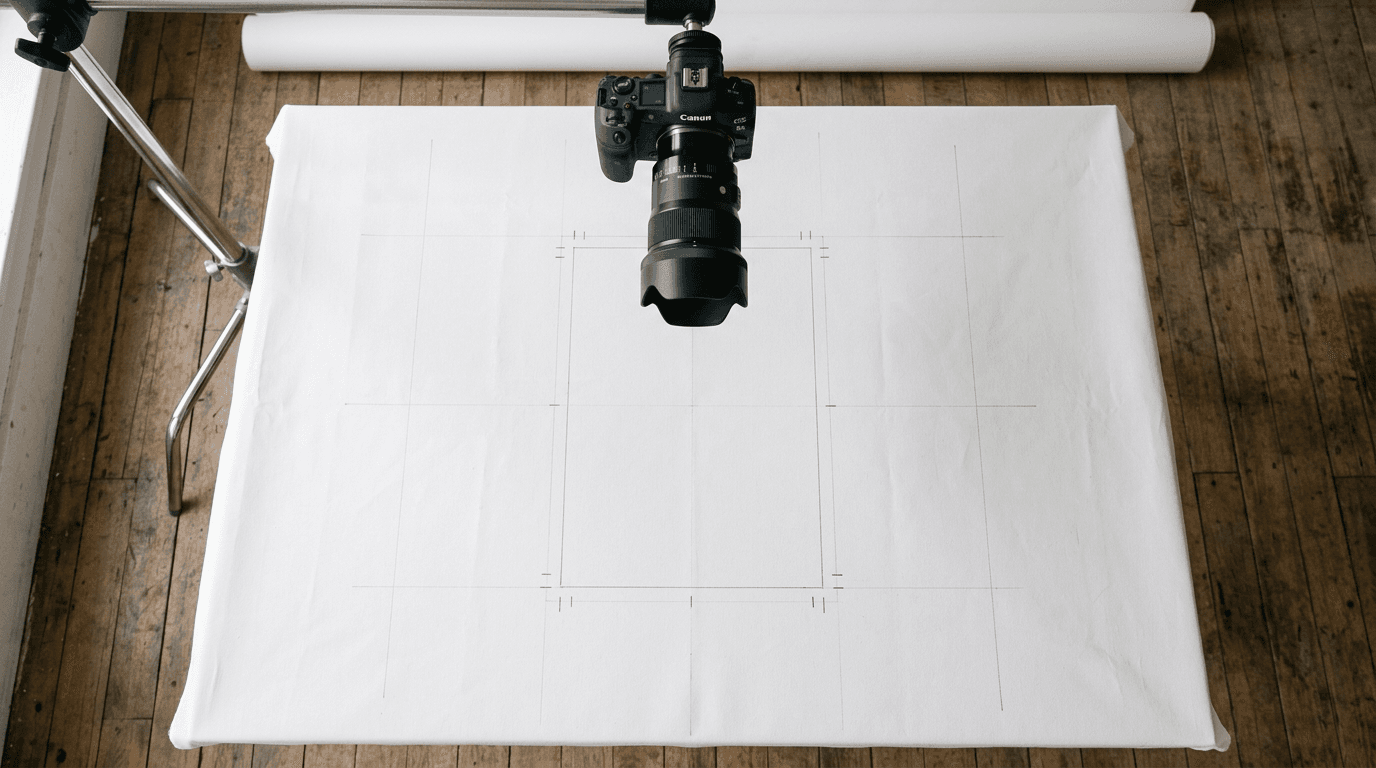
Parents placing a newborn on a white bedsheet often assume the camera is the challenging part, only to discover that achieving the exact dimensioni foto passaporto is a rigid technical hurdle. Bureaucratic biometric systems do not curve their standards for infants. A photo capturing a perfectly neutral expression will still face immediate rejection at the Italian consulate if the physical crop or the head-to-body ratio misses the required millimeter threshold. Rather than relying on trial and error at the local municipal office, completing this task requires calibrating your setup for precise optical specifications from the moment you turn on the camera.
Quick Summary
The Italian identity and passport photo standard requires strict physical print dimensions or a precise digital equivalent, with the subject's head occupying the vast majority of the vertical space. Applying these specifications to an infant requires specialized physical positioning and distortion-free optical capture.
- Optical focal length: Shoot from at least 1.5 meters away using a zoomed lens to prevent facial distortion.
- Physical support: Elevate the infant's neck using concealed supports to expose the chin without introducing visible hands into the frame.
- Biometric scaling: The face must measure exactly 27 to 32 mm from the chin to the top of the cranium.
- Illumination: Rely entirely on diffused daylight to eliminate background and facial shadows that software misinterprets as physical features.
Table of Contents
- Why the exact dimensioni foto passaporto dictates your entire setup
- 1. Calibrating the focal length and capture space
- 2. Securing the infant to expose biometric markers
- 3. Isolating the light source to flat illumination
- 4. Formatting the scaling and head ratio
- 5. Preparing the file for the official portal
- What fails verification at the consulate
- Frequently asked questions about Italian standards
- Recommended Reads
Why the exact dimensioni foto passaporto dictates your entire setup
The dimensions of an Italian passport photo dictate how you position the camera, where you place the baby, and how you crop the final image. The Italian standard measures strictly 35 mm in width and 40 mm in height. This is a critical distinction from the broader European Union standard of 35x45 mm, which is frequently the default setting on generic retail printing kiosks. Submitting a 35x45 mm photo to an Italian Questura or consulate will result in an immediate rejection because the physical photo will not fit into the laminated security zone of the standard document booklet.
Because the required frame is relatively short, it leaves very little negative space above the head and below the chin. When you combine this tight framing with the requirement that the head must dominate the vertical space, you are left with zero margin for error. If the infant's shoulders are slouched or if a parent's supporting hand enters the bottom edge of the frame, the required tight crop will unavoidably include those disqualifying elements. Understanding this restricted field of view forces you to prepare the physical environment so that nothing extraneous exists directly around the infant's face.
1. Calibrating the focal length and capture space
Choosing the right formato foto passaporto requires capturing facial features exactly as they appear in reality, without optical distortion. Smartphone cameras default to a wide-angle lens (typically a 24mm equivalent). When you hold a wide-angle lens 30 centimeters above an infant's face to fill the frame, the optics distort the subject: the nose appears bulbous, the ears recede, and the interpupillary distance stretches. Biometric software used by border control scans these exact facial landmarks. If the distances are distorted by the lens, the software registers an anatomical anomaly and rejects the file.
To correct this, you must rely on lens compression. Step back at least 1.5 meters from the infant and switch the camera to its optical telephoto setting (usually marked as 2x or 3x on modern devices). This flattens the optical field, rendering the proportions of the face accurately. The common mistake parents make here is using digital zoom rather than optical zoom. Pinching the screen to zoom in digitally simply crops the wide-angle sensor's image, degrading the resolution below the 400 DPI required by government portals. You must physically select the dedicated telephoto lens. If your device lacks an optical zoom, physically move back, take a wider shot with the main lens, and crop the high-resolution file later when reviewing the global baby passport photo requirements by country to ensure adequate pixel density.
2. Securing the infant to expose biometric markers
The strict misura foto passaporto demands that the full contour of the infant's jawline and chin is entirely visible. Infants, particularly newborns under three months, lack the cervical strength to hold their heads up. When laid flat on their backs, their necks compress, and their chins sink into their chests. This obscures the lower jawline, violating a primary biometric standard.
To safely expose the jawline without using your hands, place a firmly rolled hand towel underneath the bedsheet, positioned directly between the infant's shoulder blades. This slight elevation opens the airway and naturally tilts the chin upward, separating it from the chest collar. The background fabric must remain taut over this roll to prevent visible shadows or wrinkles.
Practical rule: Never allow skin-toned objects other than the applicant's face into the capture zone; cover any supporting hands or props completely with the identical white background fabric.
The most frequent failure mode in this step is visible parental support. Parents often attempt to stabilize the infant's head by holding the ears or the top of the skull, assuming they can crop the hands out. Because the Italian sizing requires the head to dominate the frame, any hand touching the baby will inevitably intrude into the final crop.
3. Isolating the light source to flat illumination
ICAO biometric standards mandate uniform, flat illumination across the subject's face. The software that scans the photo looks for specific contrast points to identify the eyes, nose, and mouth. When directional light casts a heavy shadow across one side of the face or under the nose, the scanning algorithm interprets that shadow as a physical deformity or an asymmetry, triggering an automated rejection.
Managing this requires disabling every artificial light source in the room. Household light bulbs emit varying color temperatures (yellow incandescent or green fluorescent) that conflict with natural daylight, creating a color cast the consulate software will flag as unnatural. Position the infant on their back near a large, naturally lit window. The light must flow from the top of the infant's head down toward their feet.
A critical mistake is positioning the infant parallel to the window so the light strikes them from the side. Side-lighting creates a bright highlight on one cheek and a deep shadow on the opposite side. If one ear is cloaked in shadow while the other is fully visible, the file will fail. You must rotate the setup so the window operates like a bright overhead ceiling panel, illuminating both sides of the face symmetrically.
4. Formatting the scaling and head ratio
Officers use a sizing template during the intake interview. Matching the precise foto passaporto italiano dimensioni prevents the image from being discarded. After capturing the raw photo, scale the head mathematically. Its vertical length must sit between 27 mm and 32 mm. The total printed height is 40 mm. Measure strictly from the lowest tip of the chin. Stop at the very top of the cranium. Ignore any hair entirely.

Achieving this manually in basic image editing software is highly error-prone because defining the top of the cranium on an infant with thick hair involves guesswork. Dedicated verification platforms automate this by mapping the facial landmarks. When utilizing a specialized baby passport photo maker, the system automatically detects the chin and the crown, aligning them to satisfy the strict head-to-frame ratio.
Parents often confuse image resolution with the physical crop. This is a standard formatting mistake. They scale the image file down so that it prints easily. In doing so, they shrink the infant's head to 50% of the frame. The 35x40 mm constraint is just the outer boundary. If the face inside that boundary only measures 20 mm high, the photo is useless.
5. Preparing the file for the official portal
Italian documents are increasingly processed through the digital CIE (Carta di Identità Elettronica) platform rather than relying solely on physical prints handed across a desk. The digital file requirements carry their own distinct thresholds that operate alongside the physical dimensions. The file must be exported in a standard JPG format, compressed to no more than 500 KB, while maintaining a minimum resolution of 400 DPI.
This creates a technical conflict: you need high-resolution clarity for the biometric chip, but a low file size for the portal upload. Standard image compressors reduce file size by blurring the edges of high-contrast areas. If you use a heavy compression tool, it will introduce pixel artifacts around the infant's eyes and mouth. The government scanner reads these artifacts as altered biometric data.
Crop the original, uncompressed file first. Match the exact pixel ratio required by the portal. Then save it at a high JPEG quality setting using an sRGB color profile. Applying compression before you crop permanently degrades the facial data. Understanding the difference between these export methods is essential. It prepares files that mimic the strict formatting of the US baby passport photo guide, yet cater uniquely to Italian data limitations.
What fails verification at the consulate
When a photo is rejected by the Italian authorities, the clerk will rarely provide a technical diagnosis; they will simply state that the image is non-compliant. Troubleshooting requires diagnosing the failure from the symptoms visible in the file.
Asymmetrical eye alignment (Most Common)
- Symptom: The infant's head is tilted slightly toward one shoulder, meaning one eye sits physically lower in the frame than the other.
- Fix: Ensure the camera lens is perfectly parallel to the floor, and use the camera grid to align the infant's pupils horizontally before capturing the shot.
Visible gums or open mouth
- Symptom: The infant is crying or resting with a significantly parted jaw.
- Fix: Wait for the infant to fall asleep or enter a deep resting state. The Italian rules demand a neutral expression with a closed mouth, though slight parting in newborns is sometimes tolerated, a wide yawn or visible gums will always trigger a rejection.
Background gradient variations
- Symptom: The background transitions from bright white near the top to a muddy gray near the bottom.
- Fix: The fabric is catching a shadow from the infant's body. Move the light source higher or place a white reflective card near the infant's feet to bounce the ambient light back onto the lower half of the background.
Corneal glare from flash
- Symptom: Bright white dots appear over the dark pupils of the infant's eyes.
- Fix: Turn off the smartphone flash. Flash photography creates harsh reflections on the moisture of the eye, which obscures the iris color and pupil shape required for the biometric database.
Frequently asked questions about Italian standards
Do newborns need their eyes fully open for Italian passports?
While adult regulations strictly require open, clearly visible eyes, Italian biometric guidelines offer a slight tolerance for newborns under six months old. If the infant is entirely incapable of opening their eyes, closed eyes are generally accepted at the discretion of the consulate. However, partially open or squinting eyes that obscure the iris color are frequently rejected. Aim for a fully awake, alert state if possible.
Can I use a standard EU 35x45mm photo for Italian documents?
No. The Italian identity card (CIE) and passport booklets utilize a specifically sized laminated housing that accommodates exactly 35x40 mm. If you arrive with a 35x45 mm print, the clerk cannot legally trim it down with scissors at the desk, as manual trimming alters the certified biometric ratio of the printed face.
What background color is strictly required by the Questura?
The official requirement is a uniform white or off-white background. It must not feature patterns, textures, or shadows. Using a light blue or gray background, which is acceptable in some other European nations like the UK baby passport photo standards, is not permitted for Italian applications.
How recent must the baby's photo be before the consulate appointment?
The photograph must be taken no more than six months prior to the date of your application submission. For rapidly growing infants, it is highly recommended to take the photo within two weeks of the appointment, as border control officers must match the live infant to the printed image.